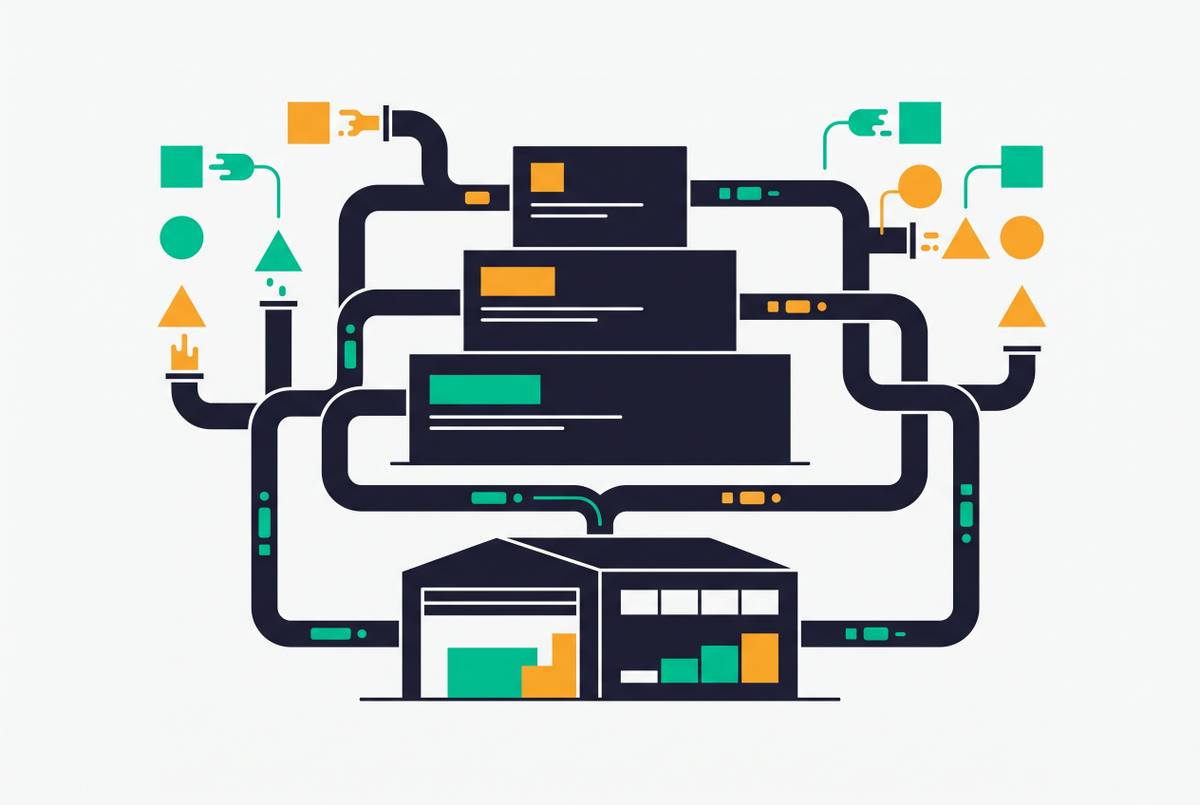
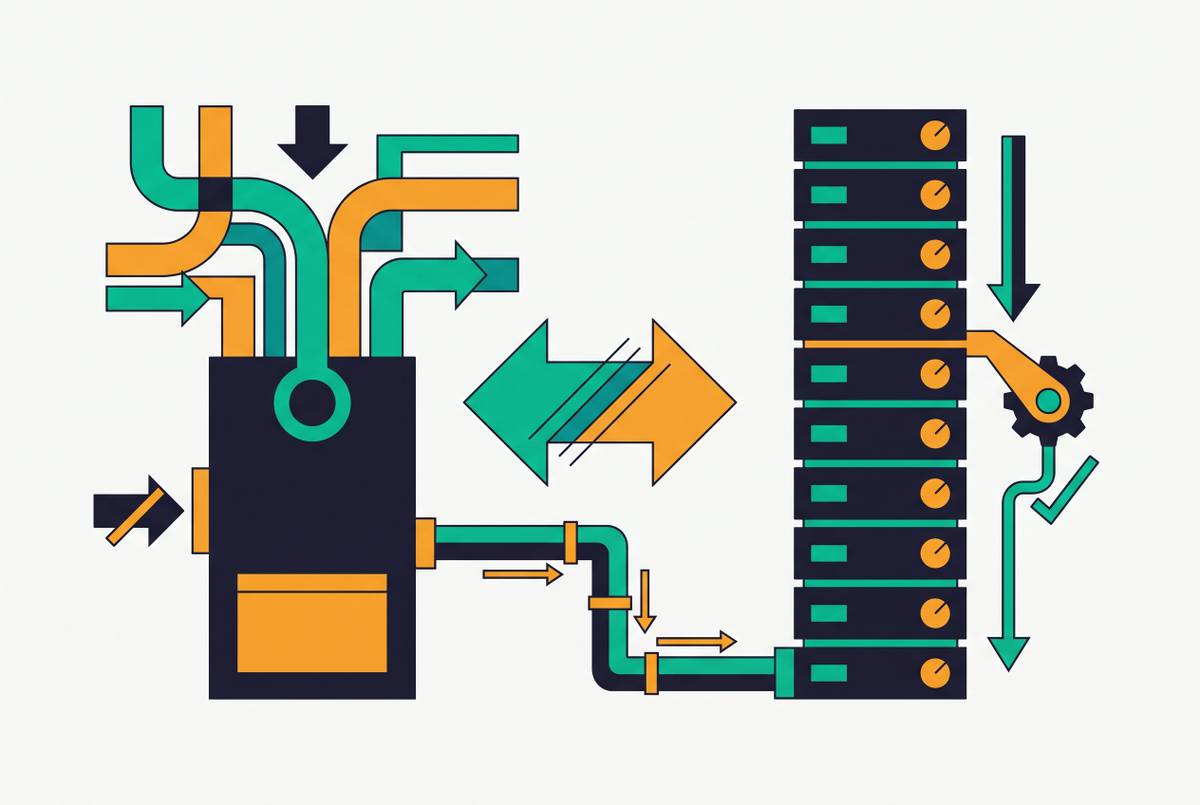
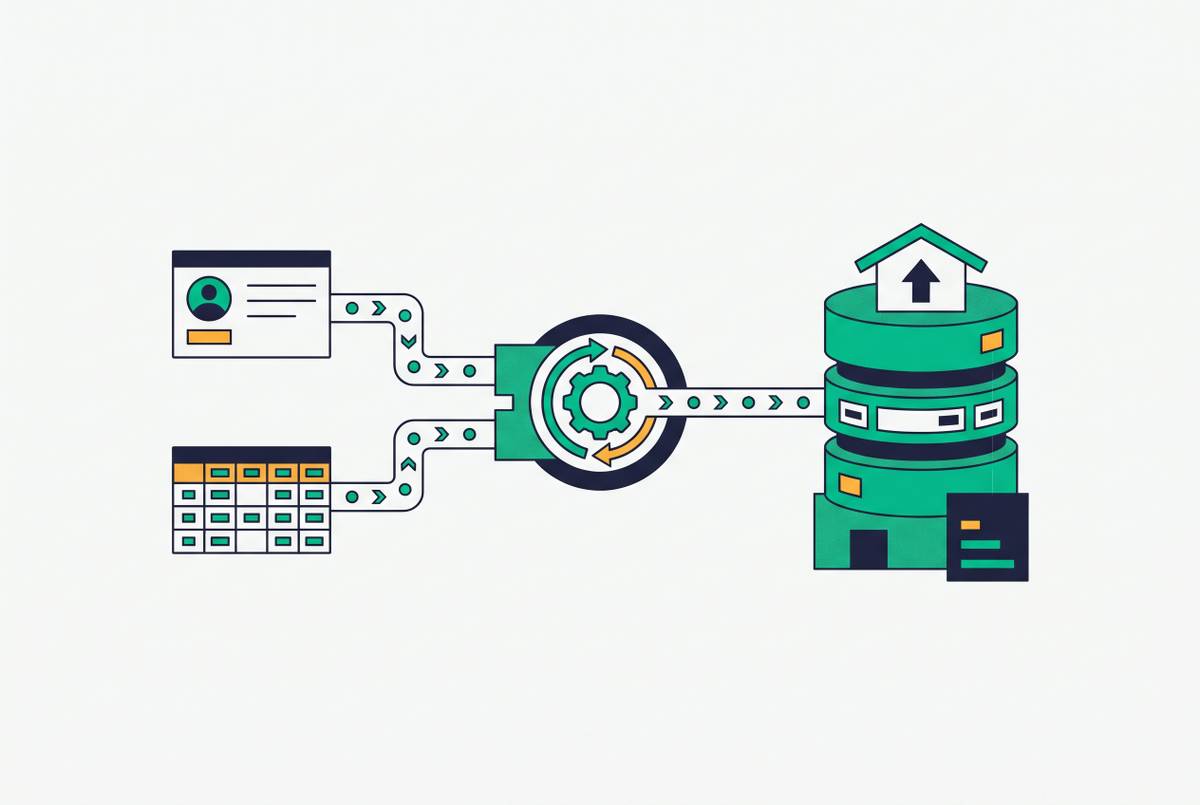
The Prebuilt Redshift Connector Tier vs the Custom Pipeline Reality Check
Prebuilt Redshift connectors cut pipeline work, not accountability.
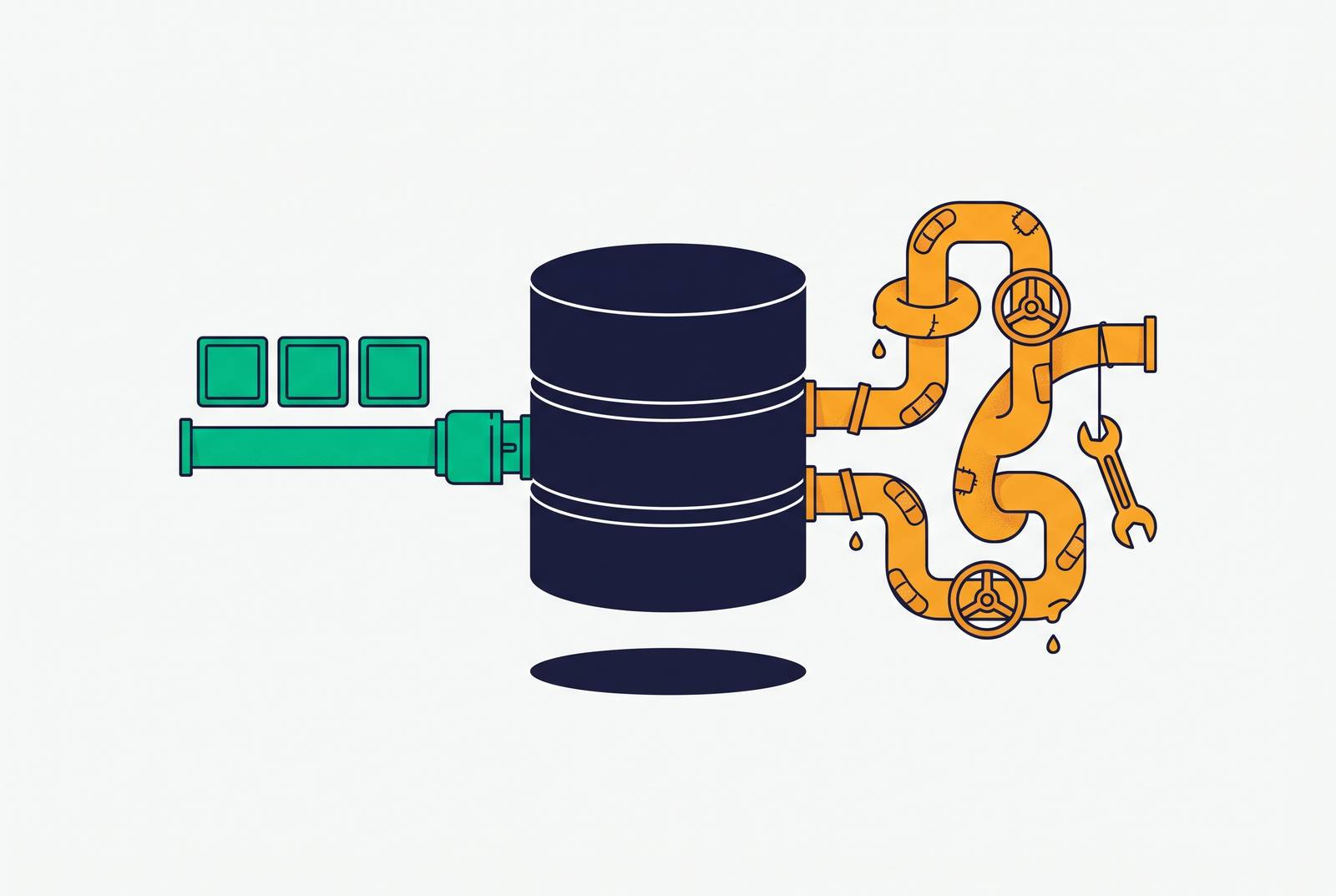
Prebuilt connectors can move enterprise customer data into cloud data warehouses such as Redshift without custom ETL pipelines, but they do not remove responsibility for architecture, governance, or cost. The choice between a prebuilt Redshift connector and a custom pipeline turns on where that responsibility belongs. Managed connectors take repeated integration work off teams' hands, while custom pipelines give them more control but leave engineers with the work of owning them for good.
What you're actually choosing between when you pick a Redshift connector
Redshift is a columnar, massively parallel processing warehouse built for analytical workloads. Its value depends on the pipelines feeding it. Choosing those pipelines depends less on how their features compare than on who will do the work to keep source data usable. A managed connection and a custom script can serve the same analytical goal while placing that responsibility in different hands.
The landscape includes managed ELT platforms, open-source and orchestration-first tools, and native AWS services. Managed platforms maintain connectors that handle API authentication, pagination, rate limiting, and schema mapping. Custom scripts let engineers set the execution logic, handle changes to schemas, and control resource usage. Native services keep the integrations they support inside the Amazon ecosystem.
How can teams sync customer data to Redshift without custom pipelines?
Prebuilt connectors remove boilerplate infrastructure that otherwise consumes engineering time before business logic can begin. Authentication, pagination, and rate limiting are necessary integration tasks, but implementing them does not distinguish one analytical product from another. Managed platforms take on that work and maintain supported connections as APIs change. That is a substantial transfer of responsibility. It lets a team configure a supported source rather than build and maintain the mechanics of extracting its data.
Managed platforms can also propagate source schema changes into Redshift, use bulk-load mechanisms such as Redshift's COPY command, and support incremental change data capture. ELT then leaves transformations to the warehouse. Because Redshift's columnar storage and massively parallel processing suit analytical transformations, loading raw data first is an architectural choice.
Native AWS Zero-ETL narrows the work further for supported sources by replicating data from Aurora, RDS, and DynamoDB into Redshift in near real time. There is no pipeline to build for those integrations. The fit depends on the source architecture, however, rather than on a general promise that every data integration can become configuration alone.
Where the prebuilt convenience ceiling appears
A prebuilt connector's support boundary can become an architectural constraint once a pipeline crosses platforms. Microsoft Fabric provides a concrete example of why the word “supported” needs qualification. Its native Amazon Redshift connector supports source access in both Dataflow Gen2 and Pipeline Copy activity, but it is not a destination connector in either. Direction is part of the capability definition.
Microsoft's connector overview lists those source and destination capabilities separately. That distinction does not mean a Redshift source cannot participate in a pipeline feeding a Lakehouse or Warehouse. A cross-platform design therefore needs explicit verification of the activities and destination support it will use before the architecture is chosen.
Vendor-managed maintenance has a different boundary, and one that is easier to overlook. A vendor can update a connector when an API changes without resolving every change in the meaning or structure of source data. Maintenance does not eliminate source-level schema drift. A pipeline can keep running while fields become incomplete or incorrectly typed, so a successful run does not prove that the data is correct.
The hidden costs in custom pipeline ownership
Custom pipelines let teams control the execution logic, how schemas are adapted, and resource usage. That flexibility is useful when a managed connector's supported behavior does not fit the workload. Engineers can define the process rather than fit it to a vendor's interface or charging unit. The freedom comes with permanent ownership, however. Engineers still have to handle monitoring, retries, and vendor API changes after they finish the first build.
Open-source and orchestration-first tools make that ownership more explicit. Teams need engineers comfortable with Python or SQL, infrastructure scaling, and connector updates. Where distributed version control is a governance requirement, the pipeline must also fit that development process. A team that can write the first working script is not necessarily equipped to maintain the integration over time.
Redshift spending can expand without accountability for the teams and workloads generating it, regardless of how ingestion was built. The operational requirement is to tag queries by team and workload and set CloudWatch alarms for runaway scans. Custom ownership is appropriate when a team can absorb these duties as part of the system and define maintenance responsibilities upfront.
How pricing models create surprise costs on both sides
How a connector is priced sets how much a working integration will cost as more people use it. For a source syncing millions of rows, bills can vary widely with how each vendor charges. A low per-row rate is therefore not enough to establish the lower-cost approach at volume. The billing unit shapes the economics of growth. This becomes especially consequential when higher data volume is the expected result of wider product adoption.
Destination-based pricing ties cost to the destinations receiving data instead of the number of rows moving through the pipeline. That changes which activity increases the connector bill. High-volume syncs are not penalized simply for moving more rows, while destination count becomes the relevant dimension. The model aligns the vendor's incentive with data growth, but it still needs to fit the customer's delivery architecture. It is a structural alternative to per-row pricing whose cost advantage depends on the customer's delivery architecture.
Custom pipelines replace that vendor-model decision with engineering ownership and resource-use decisions. They also leave the warehouse bill intact. Redshift concurrency scaling creates a separate cost that must be budgeted with the ETL tool or custom pipeline. Because warehouse and pipeline costs compound, evaluating only the connector subscription or only the resources running a script understates the financial scope of either approach.
What schema drift actually costs when it goes unmanaged
Schema drift exposes the limit of treating prebuilt versus custom as the complete decision. With either approach, teams need a clear policy to ensure that downstream data stays correct when sources change. When Salesforce or HubSpot administrators add custom fields, pipelines can silently drop or mistype them unless drift handling is configured. The pipeline can still appear healthy while delivering stale or incomplete data.
Automatic schema propagation does not resolve every part of this problem. A connector may support structural changes, but the team still needs to decide which changes should enter the warehouse and how exceptions should be handled. Without standardization, analysts write custom SQL for each source, dashboards break when APIs change, and metric definitions drift. Integration work then moves downstream.
The practical mitigation is to define a schema drift policy for each source before connecting it. Teams need to decide whether new columns should auto-add, trigger an error, or be quarantined, and configure the ETL tool accordingly. Domain-specific mapping can address a related problem earlier in the process. Marketing-specific platforms, for example, can extract cost-per-click, conversion value, and UTM parameters into a consistent schema before loading.
Security and compliance as a connector-layer risk surface
The connector layer creates a security and compliance boundary distinct from the warehouse. Credentials, tokens, and data flows need to be checked even when Redshift itself meets the buyer's requirements. Architectures that replicate and store substantial third-party data can expand audit scope, retention obligations, and breach exposure. Vendor-side caching can widen that perimeter further.
Deployment topology makes this distinction concrete. Cloud deployment works for many customers, while a VPC option meets the need to keep data inside the customer's network boundary. Self-hosted or forward-deployed infrastructure addresses cases where data cannot leave the customer's environment at all. A connector's compatibility with Redshift says little about which of those boundaries its operating model can satisfy.
Enterprise buyers should check for SOC 2 Type 2 certification, end-to-end encryption for data in transit and at rest, and private-cloud deployment options. Certification provides evidence of independently audited controls. It does not replace examination of the proposed data flows or deployment boundary. Governance requires assessing whether the integration layer's handling of credentials and customer data fits the intended environment, including any copies created outside the warehouse.
How MCP changes what "Redshift-ready" means for AI workloads
MCP adds an access question to what was previously framed mainly as an ingestion question. A pipeline can make data available for analytical transformations without providing the governed access needed for real-time AI agent consumption. Traditional ETL connectors were not designed for that role. “Redshift-ready” therefore needs to distinguish data that can be loaded into the warehouse from data that agents can use under defined restrictions.
Not all MCP servers implement credential vending or scoped access, and an unrestricted endpoint can let an agent query anything it can reach. That creates a broader access surface than most ETL pipelines. The relevant distinction is governed versus unrestricted access. Connector selection and agent access policy are related architectural decisions, but one cannot stand in for the other.
A governed data product layer addresses this by letting a product owner define which questions an agent can ask on top of which tables it can read. The tool list sets the product's rules for access. Synced, well-structured warehouse data is the foundation for that layer because access controls do not correct incomplete fields or inconsistent metric definitions. Clean Redshift pipelines can consequently support both BI dashboards and agent-readable product experiences, provided governance extends beyond ingestion to the permitted use of the data.
The evaluation framework: matching approach to actual constraints
The decision starts with source fit and available ownership. Managed ELT fits standard SaaS sources with change data capture support when a team lacks dedicated data engineers and can configure schema drift policy upfront. Open-source and orchestration-first tools fit teams that need custom transformation logic and version-control-based governance, have Python or SQL expertise, and can keep owning the infrastructure. Native AWS Zero-ETL fits supported AWS sources.
The next gate is architectural compatibility, including source and destination direction for cross-platform routes such as Redshift into Microsoft Fabric. Before configuring a connector, teams should define schema drift policy, budget for concurrency scaling, and establish CloudWatch alarms and query tagging by team. Teams then need to check how the vendor's billing model applies to the row volume and destination count they expect. Governance must cover deployment boundaries, audited controls, encryption, and credential handling. For architecture decisions in the second half of 2026, governed AI agent access is also a forward-looking criterion alongside those requirements.
For SaaS product teams, the final test is whether the integration architecture can ship as a customer-facing feature. Destination-based pricing, embeddable SDKs, SOC 2 certification, and private-cloud deployment options become product evaluation criteria. Connector count alone cannot answer that question.