Embedding Warehouse Export in a SaaS Product With a React SDK
A React SDK turns warehouse export into a native, tenant-safe feature.
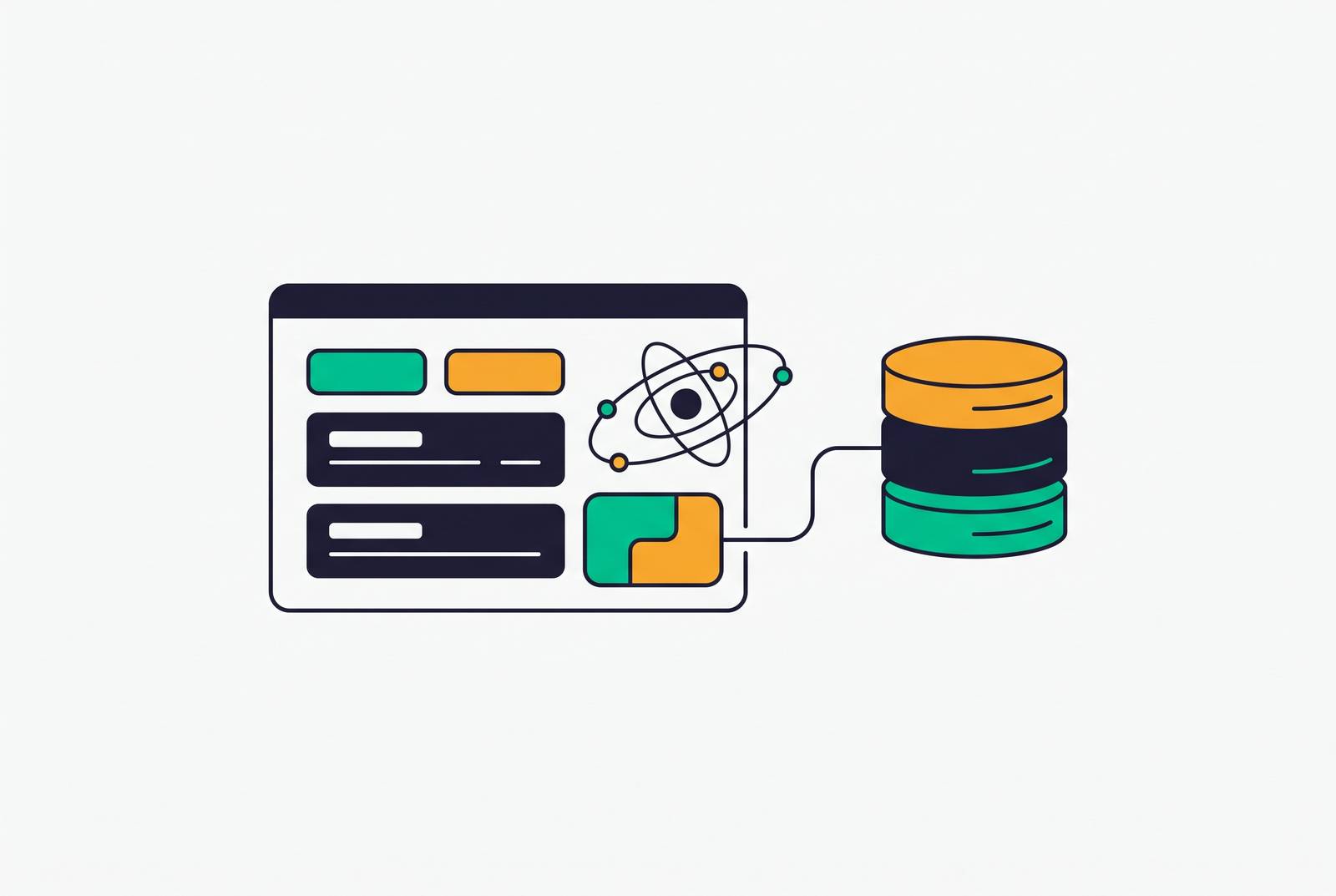
Embedding warehouse export in a SaaS product with a React SDK makes data delivery a native feature rather than a separate portal or a collection of custom pipelines. For white-label embedded data export, the architectural answer is native components backed by server-enforced tenant scope and managed destination connectivity. This gives teams control over the customer experience and gives enterprise buyers the isolation, compliance evidence, and predictable costs they need.
Why enterprise buyers now treat warehouse export as a table-stakes product feature
Enterprise customers expect self-service access to their own data, and they evaluate that access before signing. Their requirement is governed data delivery that respects the SaaS product’s authentication, permissions, and branding. A separate login or an awkward export surface signals that data access remains an add-on.
That judgment also reaches beyond the interface. Enterprise procurement teams can ask for SOC 2 Type II certification before they review the technology, while customers with strict residency requirements need proof of where their data will travel. AI-driven insights also depend on an auditable path into customer warehouse data before agents can use it. Warehouse connectivity is therefore a product requirement with a security gate.
The three embedding architectures and why two of them fail at scale
The three main embedding architectures are iframe/HTML, React SDK with API calls, and web components. Their differences determine how much control the product team retains over presentation, behavior, and authentication. Iframe/HTML is the fastest and simplest route to a demo, but it is the least flexible. Colors and logos can match while navigation, responsive behavior, and modal interactions remain separate from the host product.
For warehouse export, the iframe’s different origin also complicates session sharing and routing continuity. It needs extra bridges to use the host product’s permission model because it cannot inherit that model natively. Web components avoid some iframe limitations but sit between iframe and React SDK embedding in integration depth. They do not offer the same control over behavior as a fully programmatic SDK integration.
React components instead render inside the product’s own DOM tree, where developers can connect them to its routing, layout, design tokens, and session. Of these three approaches, the React SDK path gives developers control over both look and behavior. Tenant scoping, authentication, and destination configuration can then sit within the product’s security boundary. That control gives the team the architecture needed to implement security.
How to add white-label export with an SDK through components, a provider, and tenant scope
Integration begins with a standard npm package imported into the product’s React application. The team initializes a provider at the route level and renders destination or export components beneath it. The provider gets the API endpoint, tenant context, and server-issued authentication token once. Its child components use that shared scope instead of each setting up its own authentication context. The flow stays within the existing build pipeline and component tree.
The main implementation choice is between headful and headless integration. A headful SDK supplies a complete export-and-destination interface that the team themes through props and design tokens. A headless SDK exposes data-transfer logic and destination configuration APIs while the team builds the frontend. The former shortens the route to a customer-facing surface, while the latter suits proprietary workflows or design systems that require deeper control.
Prequel offers an embeddable React SDK for white-label warehouse and database export, including a headless path for teams that want to own the interface while delegating pipeline execution and destination management. It handles large numbers of rows for each destination and uses destination-based pricing. Regardless of the chosen platform, the representative interface covers destination selection, sync configuration, and status or history views. The provider links those parts of the product to a tenant-scoped session that must get its authority from the server.
How server-minted tokens keep tenant data isolated without exposing credentials to the browser
The SaaS backend signs a short-lived token scoped to a specific tenant and passes it to the React SDK provider. The workspace private key stays on the backend and never travels to the browser. The token carries the tenant identifier, permitted destinations or schemas, and expiry. It can also carry export-rate or row-limit claims that reflect the customer’s product tier.
Frontend filtering is not a substitute for this mechanism. A tenant ID passed as a prop remains client state that a user can inspect or modify. A signed tenant claim instead moves authority to the backend, allowing the integration layer to enforce scope at query and export time regardless of what the interface sends. The browser presents the session’s authority but does not define its boundaries.
Short lifetimes limit the window in which an intercepted token can be reused. They do not replace destination restrictions, which must remain part of the enforced scope. The SDK refreshes tokens transparently so expiry does not interrupt the normal customer experience. Interface state remains separate from export authorization, with no workspace signing credential exposed to the client.
Destination configuration and how tenants connect their own warehouses without product engineering involvement
Once customers have authorization, they can manage their warehouse connections inside the product. Without embedded setup, each new destination can lead to a support ticket and work for engineering. With it, the customer registers and manages a connection through the application’s own interface. Supported destination types can include Snowflake, BigQuery, Redshift, Databricks, a Postgres instance, or an S3 bucket.
The setup flow collects the appropriate credentials, such as an IAM role ARN, service account JSON, or connection string. The integration layer stores those credentials encrypted at rest rather than placing them in the SaaS vendor’s database. The customer or a product admin then maps datasets to a destination schema or bucket prefix and selects scheduled, on-demand, or event-driven syncing. Row and column controls let the product team define which data is available without writing a separate pipeline for each customer.
Customers still depend on engineering if it must build a connector for every new destination. With support for 20-plus destination platforms, Prequel provides one integration point across warehouses, databases, and object storage. The native setup surface still needs the product’s branding, field labels, and error states, while the platform handles connection validation and re-authentication on credential rotation. That removes operational work from the support queue, but a working connection alone does not satisfy enterprise procurement.
The security guarantees that make enterprise sign-off possible through encryption, SOC 2, and private-cloud deployment
Enterprise sign-off requires documented controls. SOC 2 Type II certification carries no legal force, but procurement teams treat it as evidence that security controls have been independently observed over a sustained period. Where it is a gate condition, arriving without it can end the evaluation before the technical discussion starts. Prequel holds SOC 2 Type II certification, which qualifies it for consideration in those processes without replacing the buyer’s own security review.
Encryption documentation must distinguish data in transit from credentials at rest. Connections between the SaaS product, integration layer, and customer warehouse must use TLS, and stored warehouse credentials need encryption and key management practices that can be audited. An intermediate store that caches customer data adds another node to the encryption, residency, and breach-notification scope. The data that the integration layer stores can therefore become part of contract talks, even if storage seems like a small detail of the build.
Private-cloud deployment addresses a different gate. A government customer or regulated financial institution that permits no data outside its network perimeter cannot accept a shared-cloud-only integration layer. An optional private-cloud deployment, which Prequel supports for strict residency requirements, makes that restriction a deployment question rather than a permanent limit on the market the product can serve. Its end-to-end encryption posture, certification, and deployment options belong in the security conversation before a deal depends on them.
How AI agents access warehouse data through the same connectivity layer
The governed connectivity established for export also provides a foundation for AI agents to access synced warehouse data. This is not permission to give an agent unrestricted access. Tenant isolation, encryption, and destination-based access controls can govern both exports that humans start and queries that agents start. White-label integration platforms such as Prequel are designed to provide that shared data-delivery layer across many platforms and frequent sync cadences.
The Model Context Protocol, or MCP, gives agents a structured way to use external data sources. A vendor-managed MCP server can connect over Streamable HTTP with OAuth 2.1 authentication and TLS, while a self-hosted server runs on customer infrastructure. In either case, the agent sees only the tools and datasets exposed by the server, which maps to the tenant scoping already enforced by the export layer. Snowflake’s vendor-managed MCP server has been generally available since November 2025, so this use of a warehouse is already in place.
A shared connectivity layer reduces the need for separate access-control arguments, but it does not answer every AI security question. Buyers still need to know whether inference infrastructure is audited and whether proprietary data can enter model training. Native warehouse export is therefore a foundation for future data-driven product experiences.
Pricing model alignment and why destination-based pricing is the honest structure for warehouse export at scale
Warehouse export should be priced as infrastructure. Per-seat pricing ties the bill to the number of people in the product, even when data movement remains flat. Row-based or volume-based charges pose a different problem because the more customers use the export feature, the more they pay. Both structures can burden product teams with tier negotiations that have little to do with the value of adding another warehouse connection.
A customer with two warehouse destinations pays for two, regardless of how many users trigger exports or how many rows move. Prequel’s destination-based pricing has no data-transfer fees, so customers face no transfer overages. This structure makes the underlying cost easier to understand as data volume grows. For the SaaS team, that predictability supports confident product-tier pricing rather than repeated renegotiation of infrastructure economics.
What a realistic implementation timeline looks like from SDK install to first customer sync
A representative implementation starts with SDK installation, provider initialization, and a destination configuration component in staging on day one to two. The team checks that the component renders inside the product layout and inherits its design tokens. On day two to three, the team adds server-side token minting to the authentication service it already uses. Testing with two distinct tenant credentials establishes whether the integration layer enforces the intended separation.
Day three to five targets the first end-to-end sync to a test warehouse destination. The work at this stage covers row counts, column mapping, and error handling. Week two turns to white-label review, including destination forms, third-party branding, and the placement of sync status and history within notification and settings flows. A native component render is only the starting point for a coherent product experience.
Week two to three covers token expiry and refresh, credential storage, SOC 2 documentation, and private-cloud requirements where regulated customers are in scope. Integration schedules can vary from this representative sequence. With the headless path, the product team does more frontend work, while building a custom pipeline for each destination means building and maintaining connectors for each warehouse customers request. Managed connectivity removes that recurring infrastructure burden without removing the need for product and security review.
The React SDK path is the architectural route to warehouse export that behaves like part of the product and can meet enterprise requirements. Native quality, server-enforced tenant isolation, documented controls, and destination-based economics make the feature viable beyond its first customer sync. Together, they turn warehouse connectivity into a feature the team ships rather than infrastructure it must continually rebuild.