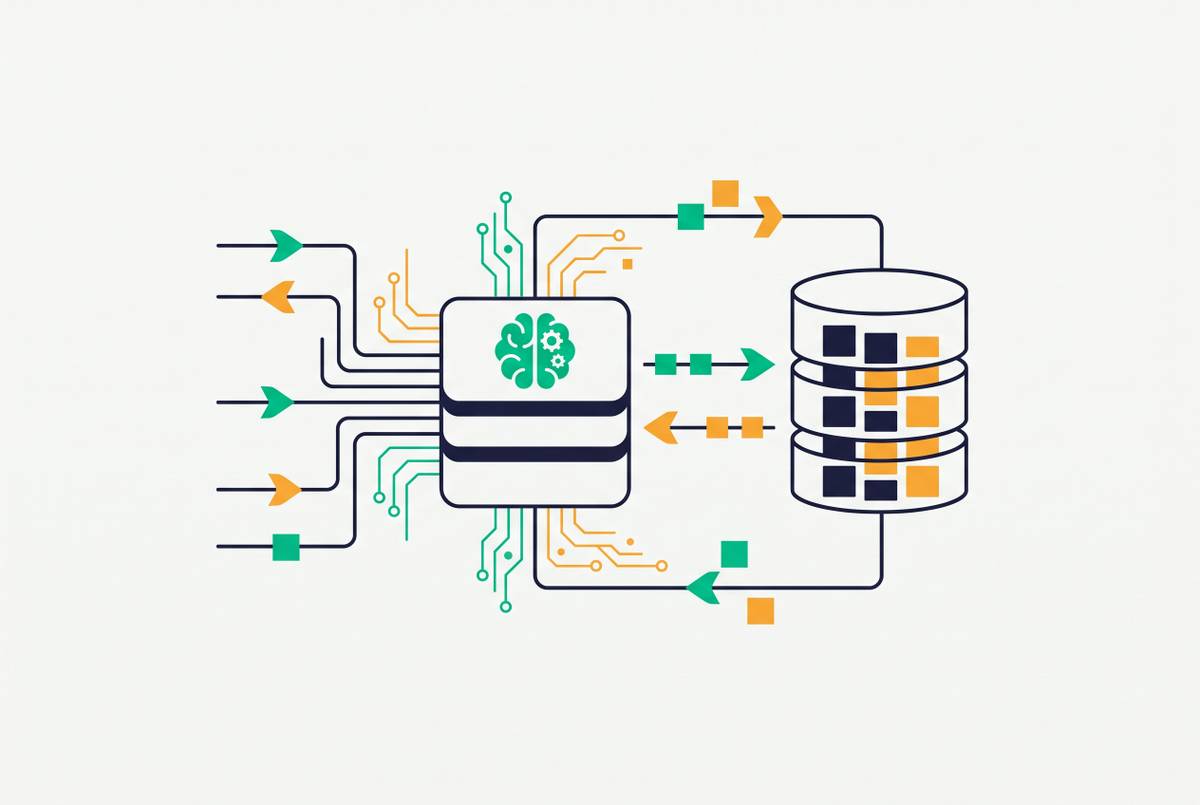
Grounding AI Agents in Customer-Owned Warehouse Data Securely
Agents need governed metrics and scoped access, not raw SQL.
An AI agent asked about a customer's shipping status, contract terms, or current pricing tier will answer anyway, even when it has never seen that customer's data. It will produce something fluent and confident, built from pattern completion rather than fact, and it will often be wrong. Foundation models carry a knowledge cutoff, and they have no native route into a customer's contracts, transactions, support history, or product usage. Grounding an agent in customer-owned warehouse data is not an optimization layered on top of a working product; it is the condition that makes the product work. What an agent can reach, not how large its parameter count is, sets the ceiling on what it can accomplish in production.
This matters most acutely for SaaS products, where a customer asking an embedded agent about their ARR, their product usage, or their account standing expects an answer about their own numbers, not an industry average dressed up to sound specific. Grounding in that context is already deploying at real scale: Google Cloud's reporting on AI ROI finds most executives report their organizations are running AI agents in production, and a large share of early adopters report positive returns already. The architecture teams choose right now, for how those agents reach warehouse data, will decide whether this wave of deployments holds up under scrutiny or becomes the next source of enterprise risk.
Wiring Agents Directly to a Raw Warehouse Schema
The obvious fix, give the agent a database credential and let it write its own SQL against the warehouse, fails often enough in production to rule it out as a serious architecture. The failure is structural. Three weaknesses appear every time this pattern ships: schema complexity (hundreds of tables, cryptic column names, several fields that all look like revenue until you check), no metric governance (three agents asked about "MRR" return three different numbers), and no safety boundary (every table the credential can reach is exposed to every question the agent is asked).
Anthropic's internal data analytics architecture found that the same model reaching high accuracy in production could not pass Anthropic's internal evaluations without the right scaffolding around it. Anthropic is explicit that this is a context and verification problem, not a code-generation problem: the model was capable, the surrounding structure was not. That distinction matters because it rules out the easy fix of simply using a better model.
A more careful alternative deserves a fair hearing: ship a scoped, read-only SQL interface against warehouse tables that are already well-modeled, and skip the heavier governance machinery. Teams do build that approach, but it still falls short on its own, because agents hallucinate joins and pick the wrong column when no description, sample value, glossary term, or lineage record tells them which of five similarly-named fields is the one that matters. Read-only access limits what an agent can change. It does nothing to stop an agent from confidently returning the wrong number.
The security failure runs on a separate track from the accuracy failure, and treating them as one problem leads to the wrong fix. A raw warehouse credential grants access to every table within its scope, so the agent's blast radius is set by the credential, not by the question actually asked. Security analysis of AI agents treats data exfiltration through conversational interfaces as its own threat category: a user asks a plain-language question, the agent pulls and synthesizes data from multiple systems, and the resulting answer surfaces PII or financial data the user could never have reached by querying any single system directly. The natural-language layer that makes an agent useful, turning a question into a synthesized answer, is the same layer that hides unauthorized data movement from the access logs that would normally catch it.
What a governed path to warehouse data requires
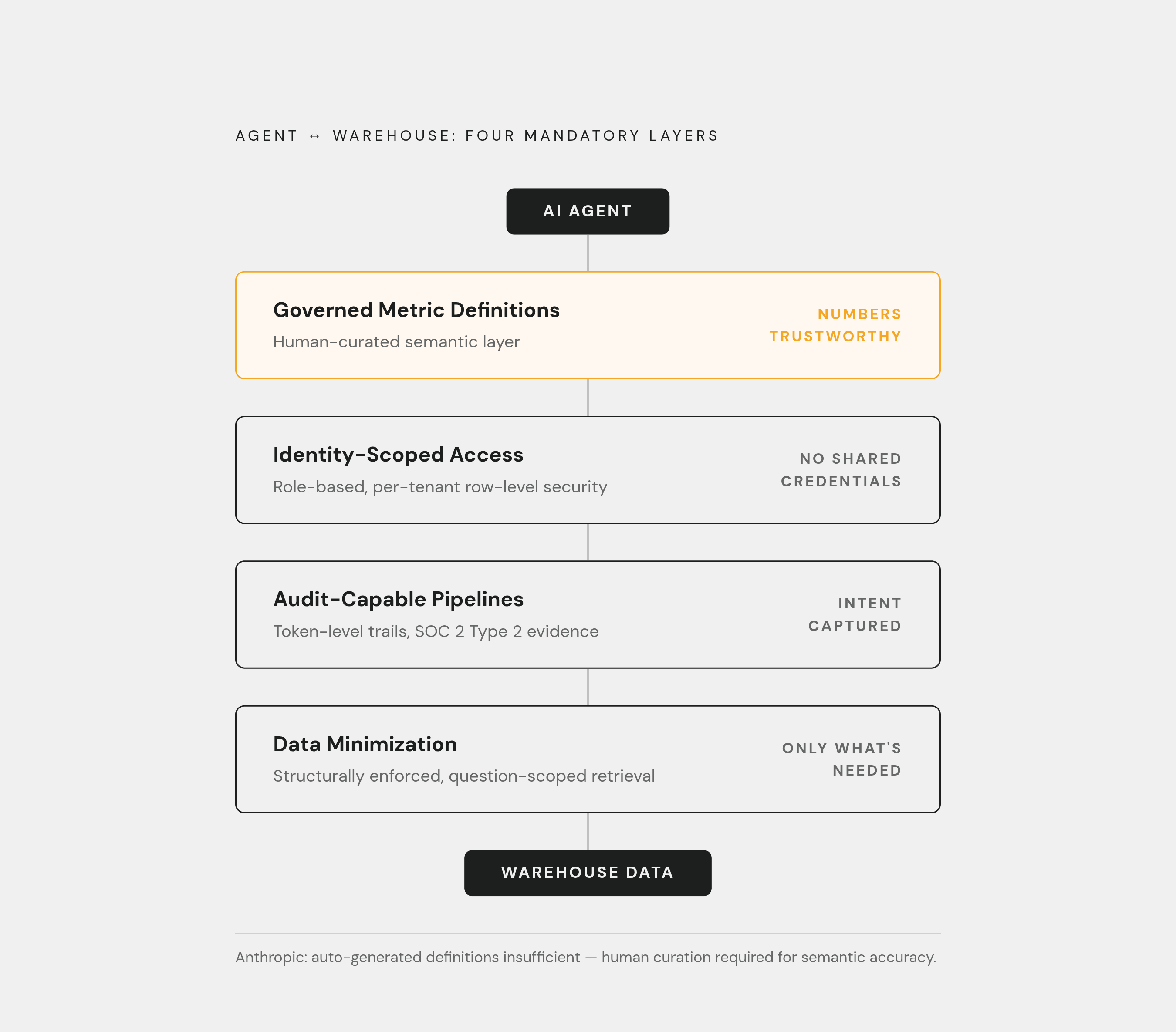
A governed connection between an agent and a customer's warehouse is built from several layers working together, not one control bolted on at the edge: governed metric definitions, identity-scoped access, audit-capable pipelines, and deliberate limits on what each request is allowed to pull back.
A semantic layer gives every agent reading from the warehouse the same governed definitions for terms like "active customer" or "net revenue," including the dimensions and logic behind them. Without that layer, agents querying the same warehouse return inconsistent numbers for the same question, but with it, every agent reads from one source of truth. Anthropic's published architecture runs on a human-curated semantic layer of metric and dimension definitions, and Anthropic found that letting a model auto-generate those definitions was not accurate enough. Human curation was the thing that made the numbers trustworthy. The direction of the industry backs this up: the dbt Semantic Layer with MetricFlow, a widely adopted agent-integration protocol, and Open Semantic Interchange (OSI) v1.0, shipped January 2026 in collaboration with MetricFlow, all converge on the same idea. Governed metric definitions are becoming the standard interface agents use to read business data.
An agent needs to be treated as its own identity with permissions scoped to it, not folded into a human user's login or routed through a shared service account. Production security frameworks call for role-based access control tied to identity instead of shared credentials, because AI retrieval inherits whatever permissions sit at the source. Governance and RBAC have to exist at the source before an agent ever connects to it, not get added afterward as a patch. The principle of least privilege, give access to only what a task needs, is harder to apply to an agent than to ordinary software, because an agent's behavior shifts with its input, following no fixed code path. Scoping has to happen at the semantic layer, not just at the credential layer, or it won't hold. For SaaS products serving many customers, this extends down to per-tenant row-level security: each customer's agents see only that customer's data, enforced by the structure of the system itself.
Every access needs to be logged, queryable, and tied back to a specific agent identity and task. Enterprise security guidance calls for token-level audit trails that capture intent, not just the raw API calls, because agent logs record natural-language questions rather than database queries, and a compliance review needs to reconstruct what was actually asked and answered. SOC 2 Type 2 auditors look for evidence that controls operated consistently across the entire audit period, not just that they existed on the day of the audit. Encryption needs to cover data in transit and at rest, and the pipelines carrying warehouse data to an agent are as much in scope for that requirement as the warehouse itself.
Each request an agent makes should retrieve only the data it needs to answer the specific question in front of it, nothing more. That data minimization has to be enforced at the semantic and access layer by design, because the agent itself cannot be relied on to impose that discipline on its own behavior.
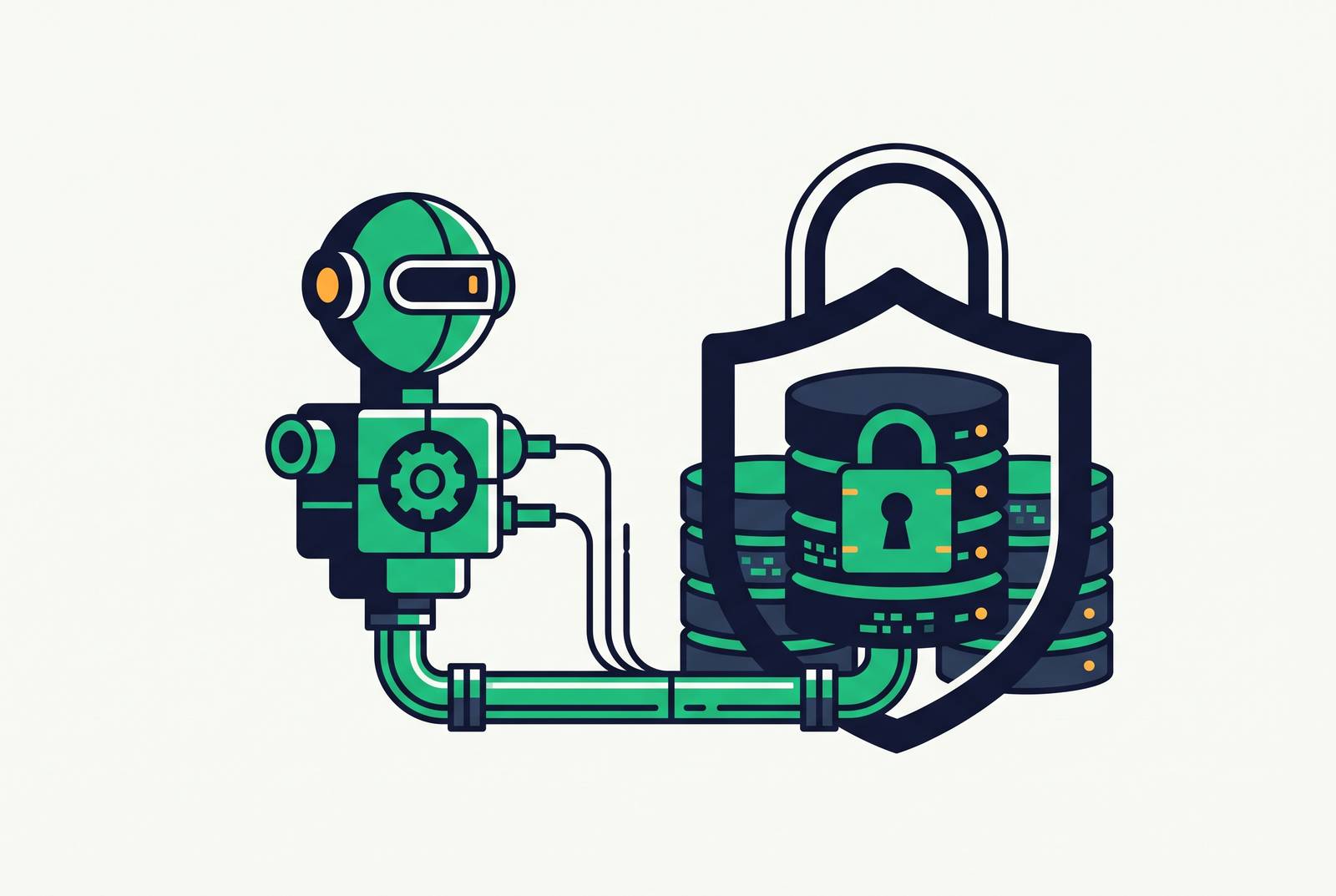
Products that embed agent data access need more than a read-only SQL connection: they need encrypted pipelines running on identity-scoped credentials, with audit trails that record which agent accessed which data and why. Prequel, a white-label data integration platform, is built around exactly that layer: it connects agents to customer warehouses with encryption in transit and at rest, SOC 2 Type 2 compliance, and per-destination access controls, letting a product team ship governed data connectivity instead of building custom pipelines for every customer.
The specific risks of multi-tenant SaaS: grounding one customer's agents without exposing another's data
SaaS teams must ground agents for many customers at once on a single shared system, without ever letting one customer's agent see another customer's data. Each customer's agents need access to that customer's warehouse data, isolation between customers has to hold without exception, and both requirements apply across every customer tenant at once. Simple shared-credential setups stop working under those conditions.
The failure mode here is tenant data leakage. When per-tenant isolation depends on convention, careful query-writing, and trust that an agent will filter correctly, instead of on the structure of the system itself, a misconfigured query or an over-permissioned agent can surface one customer's data inside another customer's session. Row-level security has to sit at the data layer itself, enforced structurally, not at the application layer and not as a rule the agent is expected to follow on its own.
Brex's embedded financial analyst, built on Cube's universal semantic layer, shows what the structural version of this looks like. Multi-tenancy is enforced with per-tenant row-level security and pre-aggregation caching, so isolation between customers is a property of the architecture, not something that depends on the agent behaving correctly at runtime. That is the distinction that matters: an embedded agent can be trusted in production when isolation is built into the system it runs on, not when it depends on the agent making the right call every time.
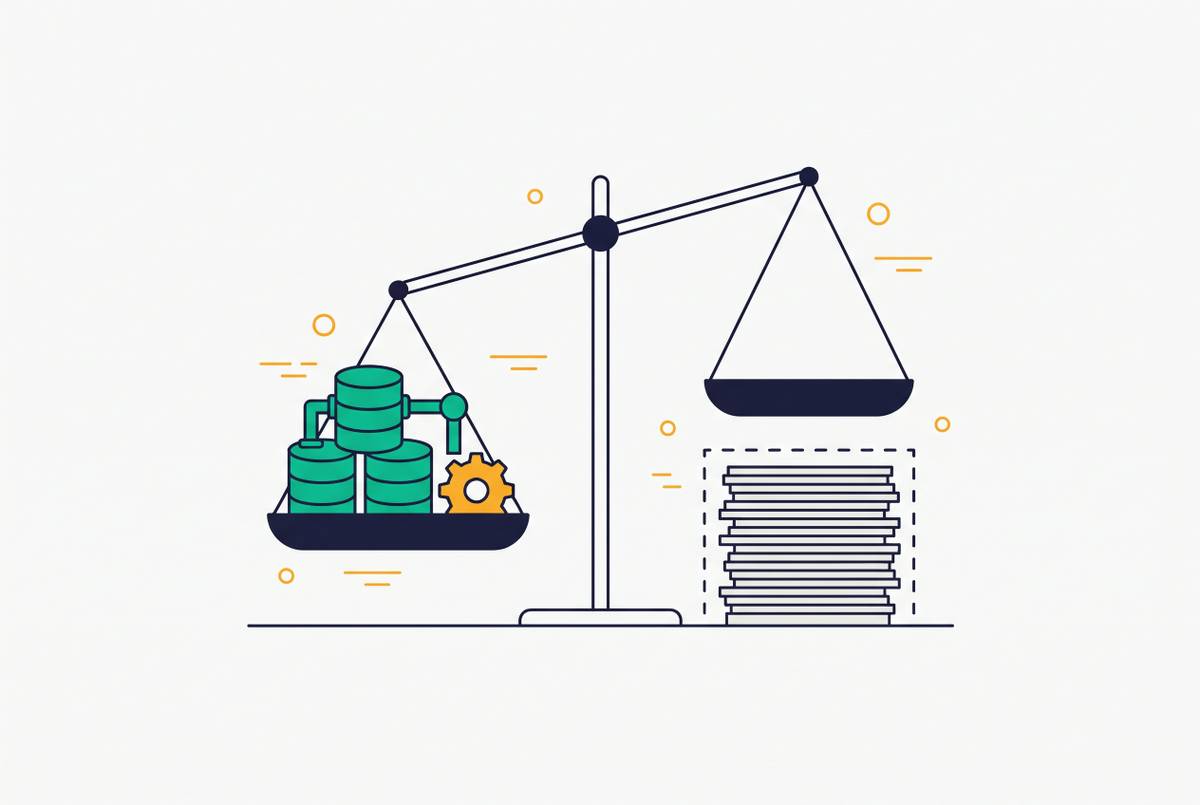
The grounding problem for SaaS teams is also a resourcing problem. Building a governed, multi-tenant data pipeline from scratch, with schema mapping, semantic definitions, per-tenant isolation, audit logging, and encrypted transport all working together, is the kind of infrastructure project that takes a dedicated data engineering team the better part of a year, not a sprint. Most SaaS teams hit the same wall eventually: customers want AI-powered analytics built into the product, and the full governed data layer behind that feature is bigger than the roadmap has room for. Shortcuts, raw credentials, shared accounts, skipping the semantic layer, reproduce the same accuracy and security failures described earlier, just multiplied across every tenant the product serves.
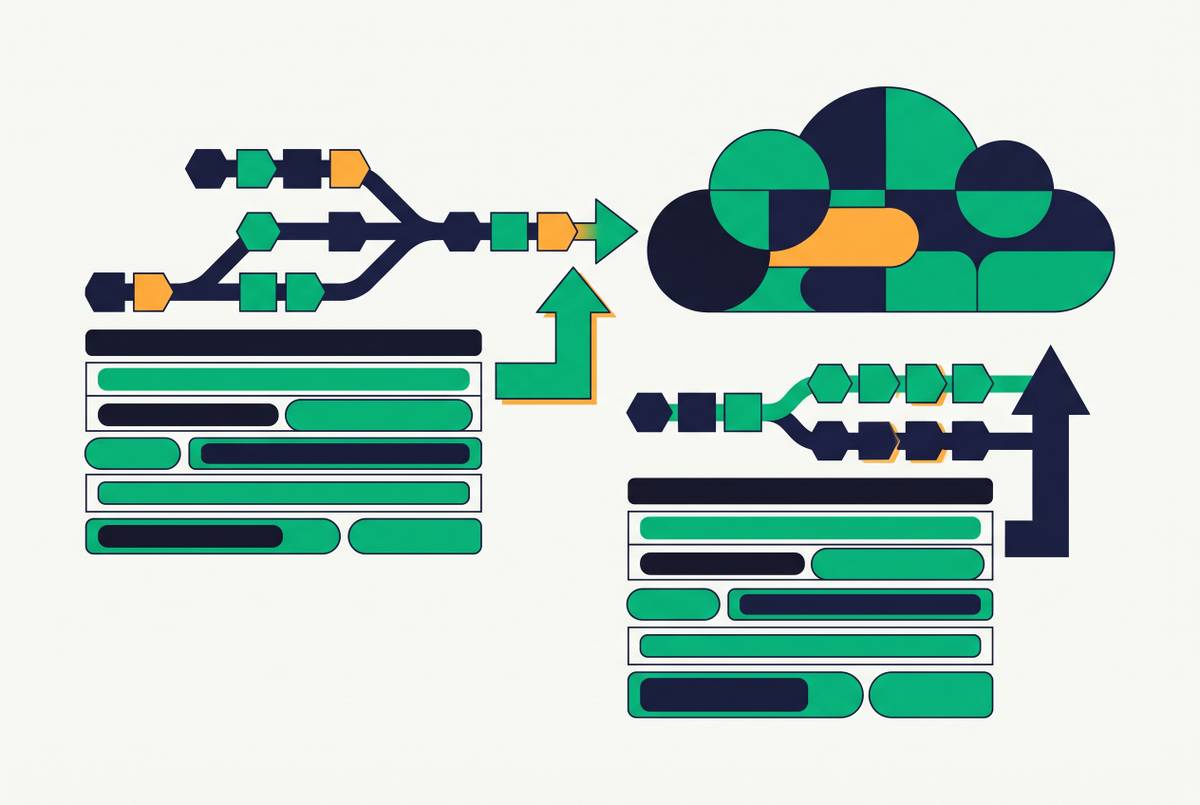
This is the point where embeddable, white-label data integration infrastructure earns its place in the architecture conversation. The governed pipeline, exporting data from a customer's warehouse, transforming it, enforcing access controls, logging every access, can be a feature a SaaS team ships rather than an infrastructure project it maintains indefinitely. A team can embed a structured integration platform that puts a clean, governed API surface between the agent and the warehouse, with metadata governance, access control, and audit trails built into the connectivity layer itself, instead of exposing raw schemas or managing a bespoke credential layer for every customer. Prequel's product fits this pattern directly: a white-label integration platform handling encrypted, governed data sync between customer warehouses and a SaaS product, with per-destination access controls and no raw schema exposed to the agent, so an engineering team can treat data connectivity as a product feature instead of a pipeline it has to maintain separately for each customer.
Compliance requirements that reshape the architecture: SOC 2, HIPAA, and private-cloud deployment
Compliance requirements like SOC 2 Type 2, HIPAA, and data residency rules are not paperwork applied after the architecture is built. They determine which pipeline designs are even allowed and which deployment models keep customer data inside the boundaries a customer's legal and security teams require.
The deployment spectrum runs from SaaS multi-tenant, the fastest to ship, where data leaves the customer's environment and lives in the vendor's infrastructure, to BYOC (bring-your-own-cloud), where the vendor manages the software but data stays inside the customer's own VPC, to air-gapped or on-premises deployment, where no data leaves the customer's environment. A regulated customer, a hospital system bound by HIPAA or a bank bound by data residency rules, may rule out the first option entirely regardless of how well the agent performs.
Certifications need to be checked against the specific deployment model actually in use. Some vendors hold SOC 2 Type 2 for their managed cloud offering but not for a BYOC or on-premises deployment, and a certification that applies to one deployment model does not automatically extend to another. A customer evaluating a vendor needs to ask which deployment the certification covers, not just whether the certification exists. Prequel lists cloud-hosted, private-cloud, and self-hosted deployment as distinct options, which reflects the same underlying reality: a compliance requirement can rule out an entire deployment model before any technical evaluation of the agent begins.
For AI agent audit logging specifically, production security guidance calls for every agent action, every data access, every tool call, to flow into a log that can be queried centrally. SOC 2 Type 2 auditors need evidence that controls held consistently across the full audit period, not just a snapshot that looks clean on inspection day.
The gap between what a compliance policy says and what an agent actually does is where regulated environments run into the most danger. Most agents ship with more access than the task in front of them requires, and in a regulated environment that over-permissioning is a compliance finding, not just a theoretical security risk: access controls have to match what the audit evidence shows actually happened, not what the policy document says should happen. Shadow AI compounds this: employees connecting agents to production data through tools nobody approved create blind spots that compliance monitoring never sees, and those connections can produce a data residency violation without anyone intending one. A policy banning unsanctioned tools does not stop an employee from using one. Enforcement at the data layer, where an agent simply cannot reach data it isn't scoped to see, is what actually closes that gap.
The Model Context Protocol as transport
MCP gets described as the USB-C port for AI, a standard connector that lets an agent plug into a tool or a data source without a custom integration for each one, and it has become the common wire for connecting agents to warehouses. That standardization solves a real problem: before MCP, every agent-to-data connection was its own bespoke integration project.
A standard transport layer says nothing about what is allowed to travel across it. MCP without a governed layer behind it opens every valve to the warehouse with no map of what the data means and no filter on who should see what. The protocol is neutral. The semantic layer, the access controls, and the audit pipeline behind the wire decide what flows through that connection, accurate or wrong, scoped or exposed, logged or invisible, not the wire itself.