Delta Lake vs Hudi for Incremental Data Processing on AWS
Hudi suits frequent record changes, Delta favors analytical reliability.
Delta Lake and Hudi solve different incremental processing problems on AWS. Hudi’s upsert-first design fits frequent record changes, while Delta Lake’s Spark-native foundations favor reliable analytical workloads. The choice depends on where a pipeline spends its effort. Once that storage decision is made, Prequel is an option for delivering incremental data to customers without building a separate pipeline for every destination.
Why Delta Lake and Hudi solve different versions of the incremental processing problem
Hudi was created at Uber to make record-level upserts and deletes fast on streaming data at scale. Its name, Hadoop Upserts Deletes and Incrementals, reflects that purpose. Delta Lake was developed by Databricks to bring ACID transactions, schema enforcement, and time travel to data lakes, with strong Apache Spark integration. It was built first to make large-scale data processing reliable, with record-level mutation a lower priority.
Both formats now support ACID transactions, time travel, and schema evolution, but those shared capabilities do not make their incremental models interchangeable. Hudi organizes work around changing records, while Delta builds on a transaction log closely integrated with Spark. Choosing between them on AWS therefore starts with which origin matches the team’s dominant workload.
How Hudi's timeline and Delta's transaction log expose incremental records differently
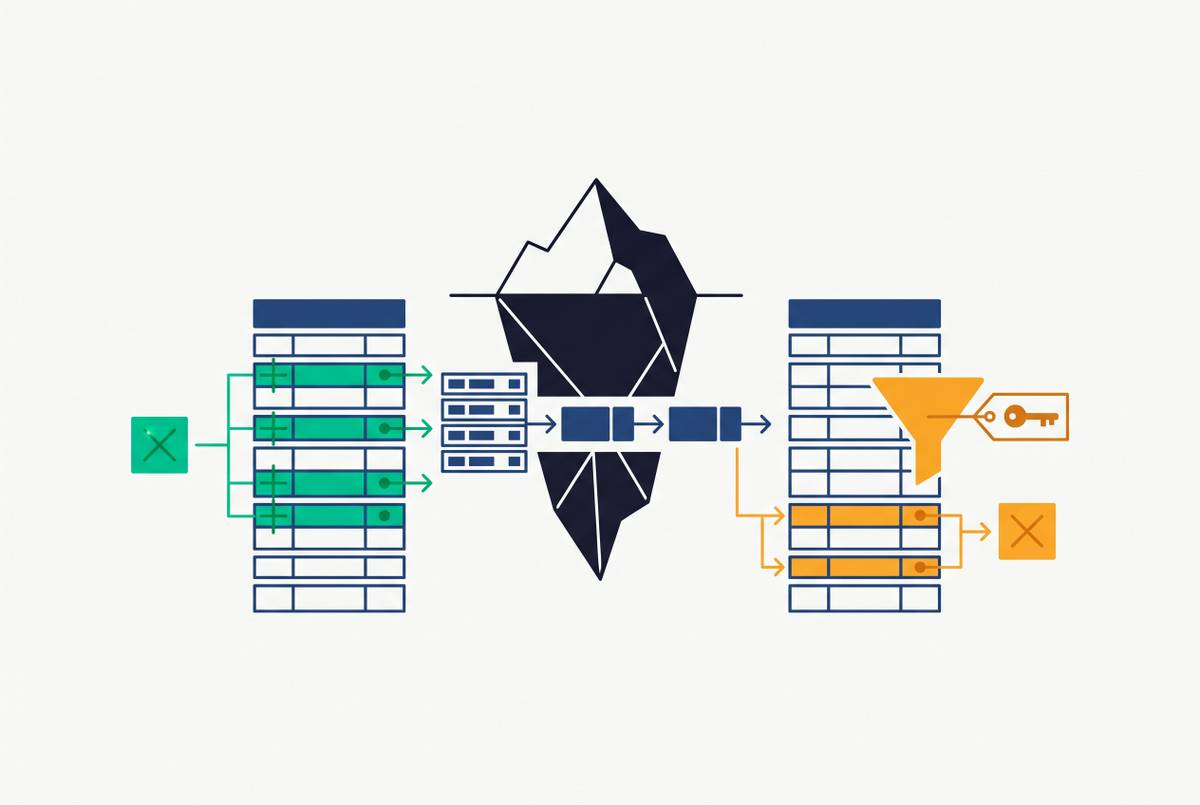
Hudi’s timeline records commits, compactions, and clean operations in the .hoodie/ directory. A downstream CDC consumer can request records that changed since a specific commit instant without touching unmodified data. Hudi also has a record-level index that links each record key to its file group. When an update arrives, that index routes the operation to the group holding the record, avoiding a full-table scan. The timeline identifies changed records for readers, while the index narrows the work for writers.
Delta Lake’s source of truth is _delta_log, an ordered sequence of JSON commit files describing file additions and removals, periodically consolidated into Parquet checkpoints. A consumer gets incremental data through Change Data Feed or Spark Structured Streaming in place of Hudi’s native commit-based query API. This file-action model is conceptually simpler and closely integrated with Spark. However, its richest incremental behavior has historically lived closest to the Spark and Databricks runtime. That distinction matters when the consumer sits outside that environment.
The runtime trade-off also depends on copy-on-write, or COW, and MOR. Hudi’s MOR suits frequent ingestion writes, while Delta’s deletion vectors mark removed rows without rewriting the base file but do not provide Hudi’s record-level routing index. Compaction is needed to reclaim performance over time. A practical pattern therefore places Hudi MOR in the Bronze ingestion layer and Delta COW or cleaned-up tables in the Gold analytical layer. For embedded connectivity platforms, including Prequel’s white-label API for incremental sync across 20+ destinations, this source query path decides whether delivery can get deltas efficiently or needs full-table re-ingestion.
What CDC pipelines on AWS actually look like with each format
Robinhood built its open lakehouse core on Apache Hudi for storage. Apache Kafka with Debezium captures database changes, and Hudi’s built-in DeltaStreamer jobs incrementally apply those changelogs to S3 tables. Hudi adds ACID transactions and timeline history to the data held in files. This architecture illustrates the fit between a continuous database changelog and a table format designed to apply record-level changes.
Salesforce built an engagement activity data lake on Delta Lake and later developed a solution for global consistency and ordering across concurrent process streams. Salesforce’s separate Data Cloud architecture uses Apache Iceberg with Spark, Hyper, and Trino, so it should not be treated as a Delta interoperability case. These examples show how teams chose their architectures, but they offer no controlled comparison of performance.
The downstream product requirement can be the same in either case. The applications customers use need to export or import changed records without rebuilding the whole dataset. Prequel supports that delivery use case, but the source format still determines the delta-extraction path. Hudi exposes commit-based incremental queries, while Delta provides Change Data Feed and Structured Streaming, making the available engine part of the product’s connectivity design.
Where concurrency models diverge and why it matters for write-heavy incremental pipelines
Getting deltas efficiently leaves open what happens when many streams write at the same time. Hudi supports multiple concurrency models, including Non-Blocking Concurrency Control, or NBCC, which allows concurrent writers to proceed without blocking each other. That is a structural advantage when many sources repeatedly update records. ByteDance/TikTok’s use of Hudi with PB-level daily increases provides scale context for the comparison with Delta Lake, illustrating when write coordination becomes a central concern.
Delta Lake relies on optimistic concurrency control, with writers attempting commits against the current log version and retrying or failing when conflicts cannot be resolved. This works well at moderate concurrency, but conflict handling can become a bottleneck as concurrent writing increases. The threshold constrains the workload while transactional correctness remains intact. Delta Lake 4.0 added Coordinated Commits in preview to coordinate multi-cloud and multi-engine writes without relying on the filesystem to coordinate commits. That addresses the historical S3 commit-safety concern, but it does not make Delta’s concurrency model equivalent to Hudi’s NBCC.
How GDPR and CCPA delete workloads expose each format's compliance posture
GDPR and CCPA right-to-erasure workloads require a table to remove specified records. Hudi’s record-level index routes a delete to the exact file group holding the key, and its timeline makes the deletion traceable for compliance reporting. Zendesk’s use of Hudi on AWS for row-level GDPR and CCPA deletes shows that this requirement can drive a production architecture. Its pipeline applies transaction changes through Amazon EMR and Hudi, with the tables registered in AWS Glue.
Delta Lake also supports row-level deletes through its transaction log and deletion vectors. Because the engine has no record-level routing index, however, it finds the affected files through file-level statistics in place of direct key lookup. ACID transactions matter in both formats because a failed delete must not leave a partially modified table. Time travel provides evidence of table states before and after the operation, but the surrounding controls still determine the compliance posture.
Security, governance, and private-cloud deployment on AWS with each format
Neither format is inherently SOC II compliant. Role-based access control, encryption at rest and in transit, audit logging, and compliance controls must be configured in the implementation. Both formats make their data available as standard Parquet on S3, so catalog systems such as AWS Glue or Unity Catalog and IAM policies enforce the controls. AWS Glue has native support for both, giving teams a place to connect them. Format selection therefore depends on how the format fits the existing control environment.
Hudi can run on Amazon EMR or bare Kubernetes, so teams have a private-cloud path that keeps data within the enterprise’s infrastructure. Its timeline and index remain portable with the data files. Delta Lake also fits AWS-native governance arrangements, including querying Delta tables through Amazon Redshift Spectrum. Both open formats let teams use multi-engine access and depend less on any one compute layer. Teams choosing a lakehouse platform should still check its persistent storage format before assuming that platform-level features are just as portable.
AWS service integration: where Glue, EMR, Athena, and Redshift treat the formats differently
AWS Glue natively supports Hudi and Delta Lake for data lake processing. AWS Glue 4.0 also provides an enhanced Amazon Redshift connector and a built-in Snowflake connector. Together, these capabilities support the pattern of ingesting into an open table format and then loading newly written data into a warehouse. However, connector availability does not make the incremental extraction mechanism identical. The ETL job still needs to use the query path exposed by its source format.
Amazon EMR gives Hudi teams a self-managed compute environment with access to the timeline and NBCC concurrency model. DeltaStreamer can continuously pull change data from Kafka, JDBC, or S3 through incremental DFS inside an EMR cluster. This makes EMR relevant to the write-heavy ingestion side of the architecture. Glue provides another Hudi-aware Spark environment for incremental queries. The choice of compute therefore determines where the format’s incremental capabilities can actually run.
Athena exposes a particularly important boundary. It supports Hudi snapshot and read-optimized queries, but not Hudi incremental queries. A request for records changed since a commit instant must therefore run through a Hudi-aware Spark engine such as EMR or Glue. Both formats can be queried through Athena using cataloged tables, while Redshift serves as a warehouse destination and Redshift Spectrum provides a Delta query path. Ad-hoc table access and incremental record extraction are different service capabilities, even when they operate on the same S3 data.
A practical decision framework for choosing between the formats by incremental workload type
The decision reduces to three workload questions, namely how frequently records change, whether targeted compliance deletes are required, and how much operational overhead the team can absorb. Choose Hudi when CDC from many sources updates the same record keys over and over at high frequency. Auditable record-level deletes and high write concurrency strengthen that case. The trade-off is Hudi’s steeper operational learning curve, which must fit the team’s capacity or its managed Hudi environment on AWS EMR.
Choose Delta Lake when the team already works in Databricks or Spark and wants a straightforward path to reliable incremental reads. Change Data Feed and Structured Streaming handle common cases without the need for a separate incremental query interface. Delta also fits workloads that mostly use analytical reads over changes built up over time, where Photon and Liquid Clustering help Gold-layer queries run well. Its connector ecosystem spans Trino, Flink, PrestoDB, Snowflake, and BigQuery. That ecosystem and the simpler transaction log model make operational simplicity a legitimate reason to choose it.
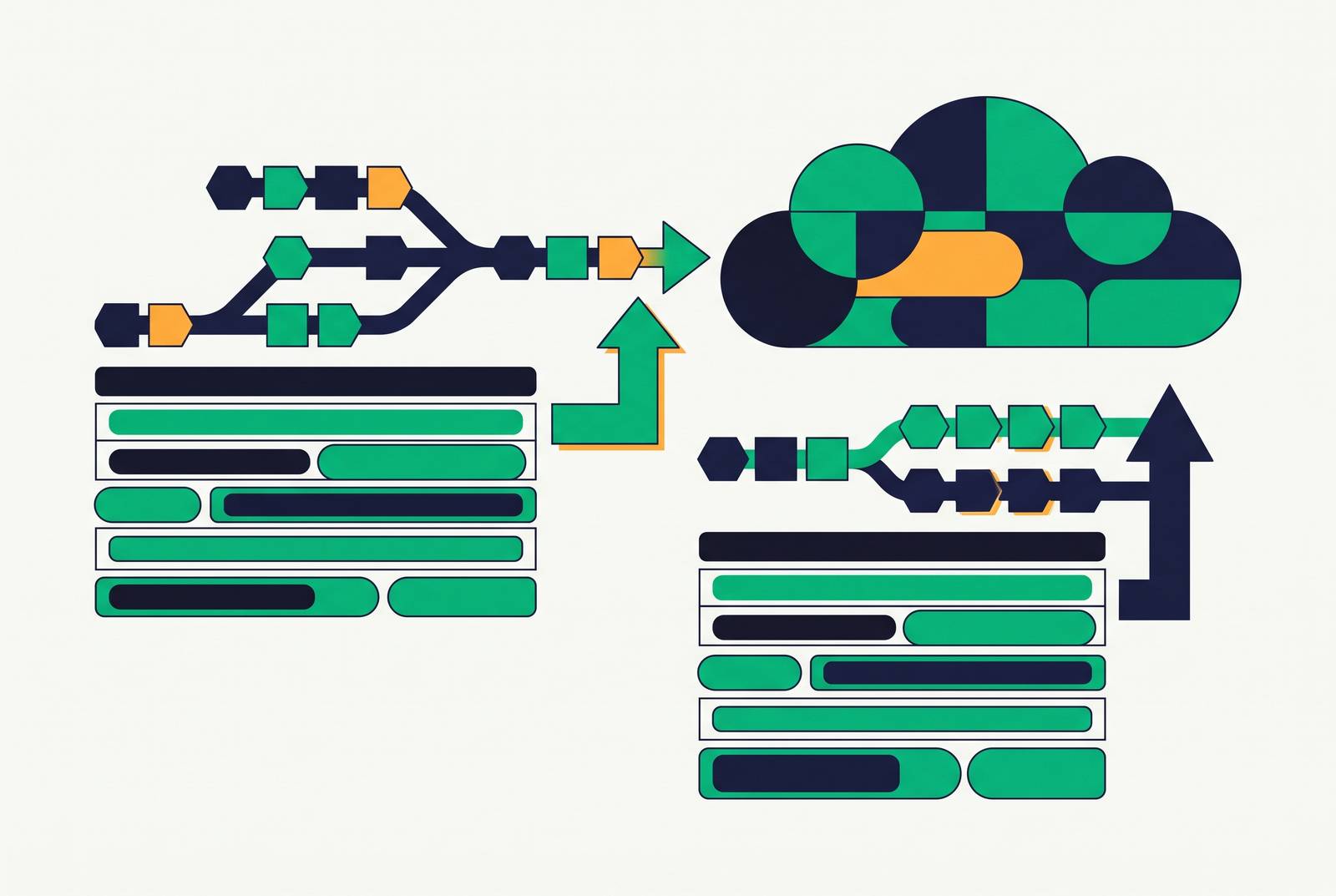
A hybrid architecture is an equally valid decision. Hudi can be used in the Bronze layer, where most of the work is frequent CDC writes, repeated key updates, and targeted deletes. Delta Lake can be used in the Gold layer, where cleaned-up tables are used for read-heavy analytics. This widely used pattern draws on what each format was first built to do well. It is a practical heuristic rather than a requirement that every pipeline maintain both formats.
How SaaS products ship incremental data connectivity to customers without rebuilding this infrastructure
Choosing the table format settles how data will be stored and how incremental processing will work internally. SaaS teams still need to deliver data or selected subsets to customers’ warehouses, databases, and object storage. Prequel is a white-label integration option built for that delivery problem. It supports 20+ destinations, including Snowflake, Redshift, BigQuery, Databricks, and S3, without requiring product teams to maintain a custom pipeline for each destination. The source format sets which deltas are available, and this delivery layer handles the next engineering boundary.
That boundary includes schema mapping, authentication, retries, and destination-specific formatting. Prequel’s embeddable React SDK and API let teams make connectivity a product feature that can move large numbers of rows often across destinations. Its destination-based pricing keeps transfer volume from driving the price as incremental sync runs more often. SOC II Type 2 certification, end-to-end encryption, and the option for private-cloud deployment help meet the enterprise controls discussed earlier. AI agents can also get synced data through Prequel when a product needs up-to-date data from a customer’s warehouse.
A team can also choose other managed integration services or custom-built pipelines. For managed delivery, the relevant distinctions include white-labeling, destination-based rather than volume-based pricing, and private-cloud availability. Prequel is a strong fit when those requirements accompany customer-facing incremental sync. It does not replace the underlying format decision or erase differences between Hudi’s timeline and Delta’s transaction log. The complete architecture matches the format to the internal workload and the delivery layer to the customer-facing requirement.