White-Label Data Integration Platforms for SaaS Product Teams
A buyer's guide to choosing embedded export on branding, isolation, security, and cost.

White-label embedded data export lets SaaS product teams add exports for their customers without having to build and maintain every destination connector themselves. A white-label data sync platform is the fastest path from customer demand to a shipped feature when customers need data in their own warehouses, databases, or object storage. The deciding criteria are native embedding, tenant isolation, control over data storage, and pricing that holds up as usage grows.
What white-label data integration actually means for SaaS product teams
An embedded iPaaS, or integration platform as a service, lets customers connect a SaaS product to tools such as HubSpot, Salesforce, or Google Calendar without leaving its interface. The backend handles API connections, transformations, and errors under the host product’s branding. This differs from standalone tools such as Make or Zapier, although Zapier also offers a partner embedding option with co-branding. A unified API instead provides one endpoint for a category of applications, without the cross-category workflow logic of an iPaaS.
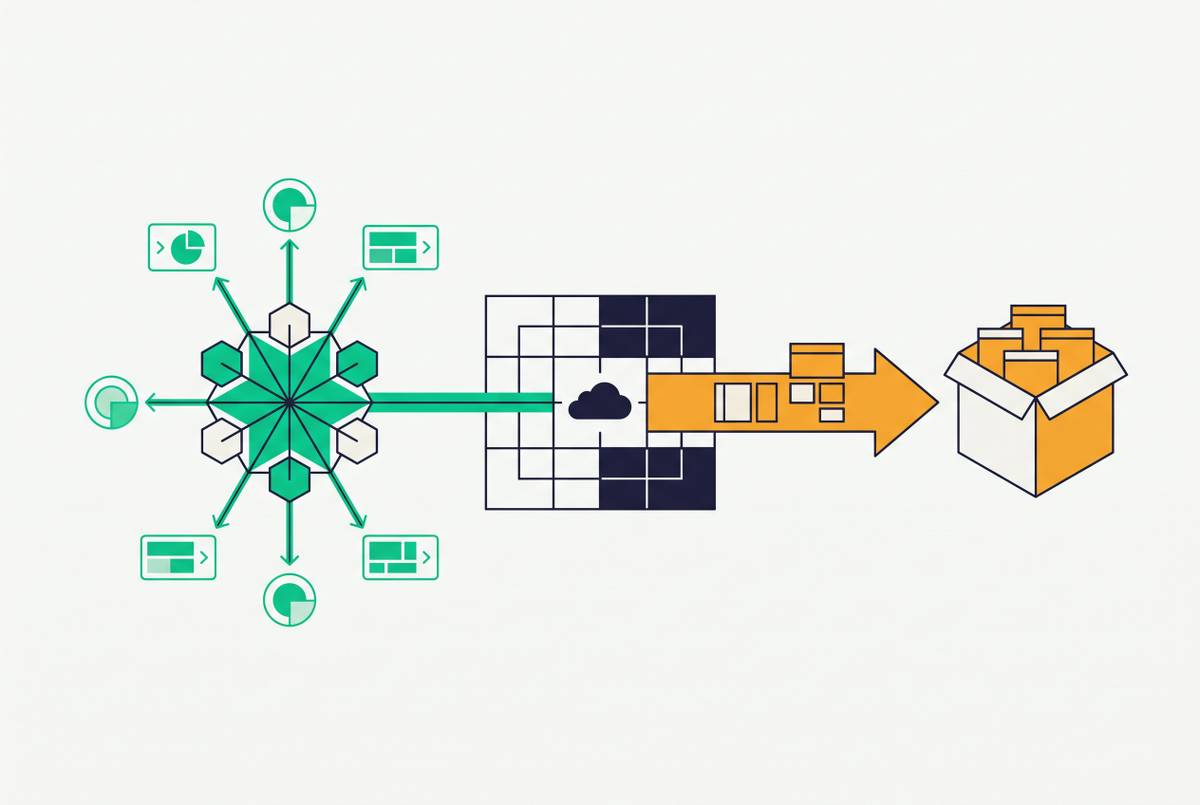
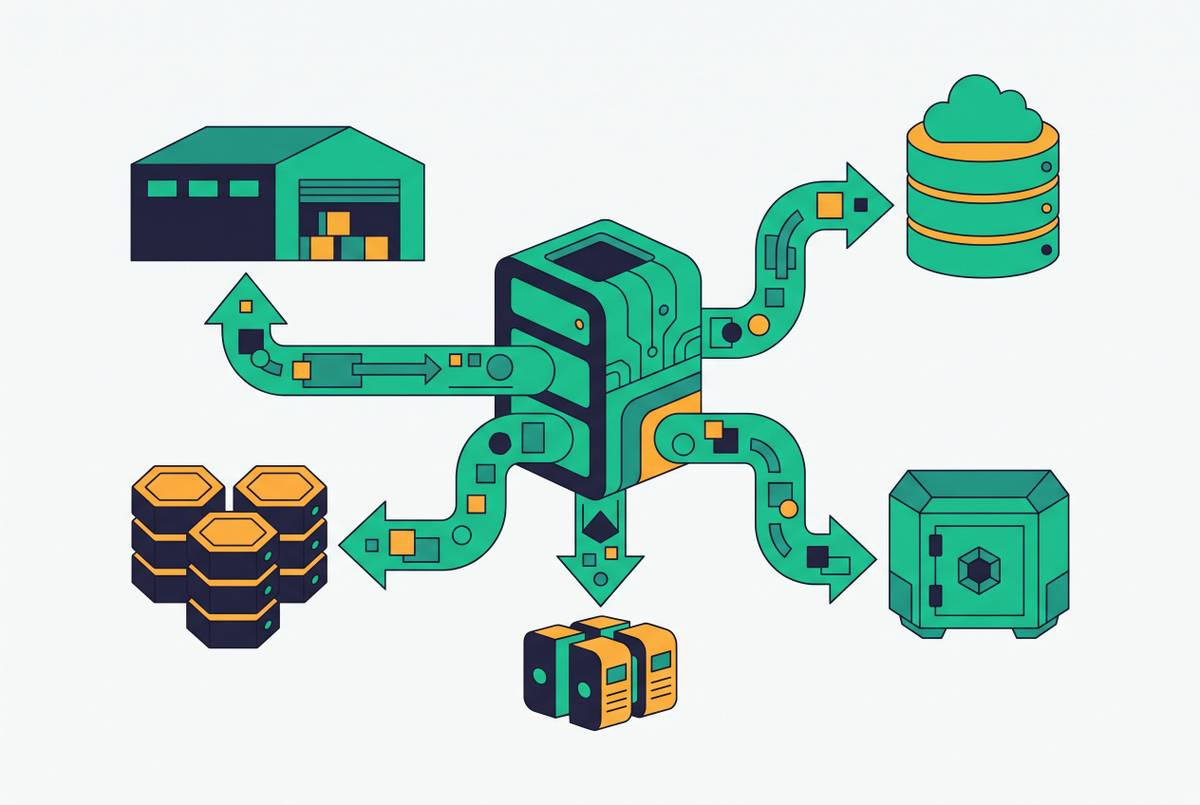
The second meaning is a white-label data sync platform for bulk export and import between a SaaS product and customer-controlled storage. Prequel occupies this infrastructure layer, moving high volumes of rows at frequent intervals across 20+ platforms with its branding invisible to the end customer. An iPaaS orchestrates workflows between apps, while data sync moves bulk data to warehouses, databases, or object storage. A third category, embedded analytics, provides visualization and querying inside the application. The rest of this article covers the data sync and embedded iPaaS shapes, because those are the ones product teams are most likely to underestimate.
Why product teams end up building integrations in-house — and why that choice tends to compound
A single Salesforce or Stripe connector looks like a bounded engineering task. Building it gives the team control and avoids an immediate vendor dependency. But the connector also creates continuing obligations, including API versioning, rate-limit handling, retries, and error reporting. None of that work ends when the feature ships. As the integration surface grows, maintenance competes with the core product roadmap.
Data sync adds destination-specific differences that make the burden particularly acute. Snowflake, BigQuery, Redshift, Postgres, and S3 have different schema conventions, authentication patterns, rate limits, and failure modes. Building for one destination does not remove those differences from the next, and security and residency requirements must be addressed as coverage expands. For a CRM, ERP, or logistics product whose integrations support retention rather than define its core value, that is a poor use of engineering quarters.
A platform outage or pricing change can leave the SaaS company dependent on a supplier it does not control. SLAs, contract terms, and architecture decisions can bound that exposure. But the work of maintaining connectors in-house keeps growing as the company gains customers.
What white-label data export requires to feel native in a SaaS app
The first level removes vendor branding, while the second matches the host product’s colors and typography. The third supports per-tenant themes for reseller and OEM use cases. The fourth extends control to custom domains, notifications, PDF exports, AI chat, and error messages.
The production test is whether the team can apply that control itself. A sales engineer can preconfigure a convincing demo without proving that per-tenant overrides belong in the product’s normal release process. The stronger test is shipping a tenant theme and custom domain through CI/CD without a support ticket. Where AI chat is part of the experience, vendor attribution also matters because it can confuse who owns support.
For data sync, the relevant surfaces are connection configuration, destination setup, and sync status. Those surfaces need to use the host product’s branding and stay within its navigation. Redirecting customers to a vendor portal does not deliver the same experience. The evaluation therefore has to follow the whole customer journey.
Multi-tenancy and data isolation: the architectural requirement that separates demo-ready from production-ready
Brand control cannot make up for weak tenant isolation. In a shared database, row-level security must operate at the data layer rather than depend on application filtering that can be bypassed or misconfigured. Dynamic database routing or per-tenant storage keeps tenants more firmly apart and lets each scale on its own.
An embedded iPaaS must scope OAuth tokens, workflow state, and integration credentials to the tenant. A data sync platform must keep each tenant’s destination credentials and sync jobs separate and keep different customers’ data out of a shared queue. With Prequel’s destination-based scoping, each customer’s data flows to its own warehouse, database, or object storage.
Scale also tests whether tenant-specific behavior is configuration or recurring engineering work. Per-tenant themes should not require custom development for each customer, and query routing needs to account for dedicated capacity where applicable. Qrvey describes passing user, tenant, role, and permission context through tokens from the host application. That pattern gives evaluators a concrete way to probe context propagation without requiring a separate, continuously synchronized user system.
Security, compliance, and private-cloud deployment as non-negotiable evaluation filters
SOC II Type 2 certification is an enterprise baseline that must be accompanied by architectural review. It addresses whether controls operated over a sustained period. The review must also check where customer data sits when the platform works as expected and when it fails. A retry queue that holds PHI or financial data can leave that sensitive data on vendor infrastructure even when it is meant to go to customer-controlled storage. That makes failure handling a procurement concern as well as an engineering concern.
Private-cloud, VPC, and forward-deployed options can give the buyer control over that exposure where a hosted service may fall short. A GDPR evaluation needs to check where EU customer data is processed and stored, while a review of healthcare requirements needs to cover HIPAA explicitly. A regional endpoint alone does not answer a requirement that data never leave a jurisdiction. Prequel is SOC II Type 2 certified, encrypts data in transit and at rest, and supports optional private-cloud deployment.
The procurement test should go beyond the certification page. Request the last third-party penetration test report, the encryption key rotation policy, and a reference customer in a regulated industry. These materials connect stated controls to evidence and operating practice. A platform that cannot provide them has not cleared the enterprise evaluation, regardless of how polished its security presentation looks.
Pricing models and how they behave under growth — where the real cost difference lives
Pricing structure matters more than the initial quote because each model charges for a different kind of growth. Per-seat or per-user pricing rises with adoption, which can make a broadly available embedded feature expensive to sustain. Per-workspace or per-tenant pricing instead adds cost as the SaaS company acquires customers. These models need to be weighed separately from usage pricing because the number of customers and the amount of data moved do not always grow together.
Charges per API call, row synced, or GB transferred make teams pay more as customers do more of what the integration is meant to help them do. Destination-based pricing offers a different basis, as illustrated by Prequel’s model, which charges by destination count rather than data volume and has no surprise data-transfer fees. It separates the cost of moving more data from the cost of adding destinations. Supporting Redshift, BigQuery, and Snowflake therefore does not require the SaaS team to maintain each connector itself, although destination count remains a billing variable.
The vendor needs to show the bill for twice the customer count at twice the average customer’s data volume. Then model customer count and volume at 2× and 5× current levels. Prefer destination-based or flat-rate models over per-seat or per-row models where predictable growth economics is the requirement. An answer that cannot be calculated precisely leaves exposure unresolved.
Developer experience: how embedding method and API design determine actual time-to-ship
Embedding methods trade speed against control. An iFrame is the fastest option and works across frontend stacks, but customization remains limited to what the vendor exposes. JavaScript SDKs and web components give developers more control over interaction and can share CSS variables and design tokens with the host application. Framework component libraries provide the tightest fit with an existing design system, although they depend on the vendor maintaining framework-specific packages. The right comparison is how much product behavior the team can control after the initial embed works.
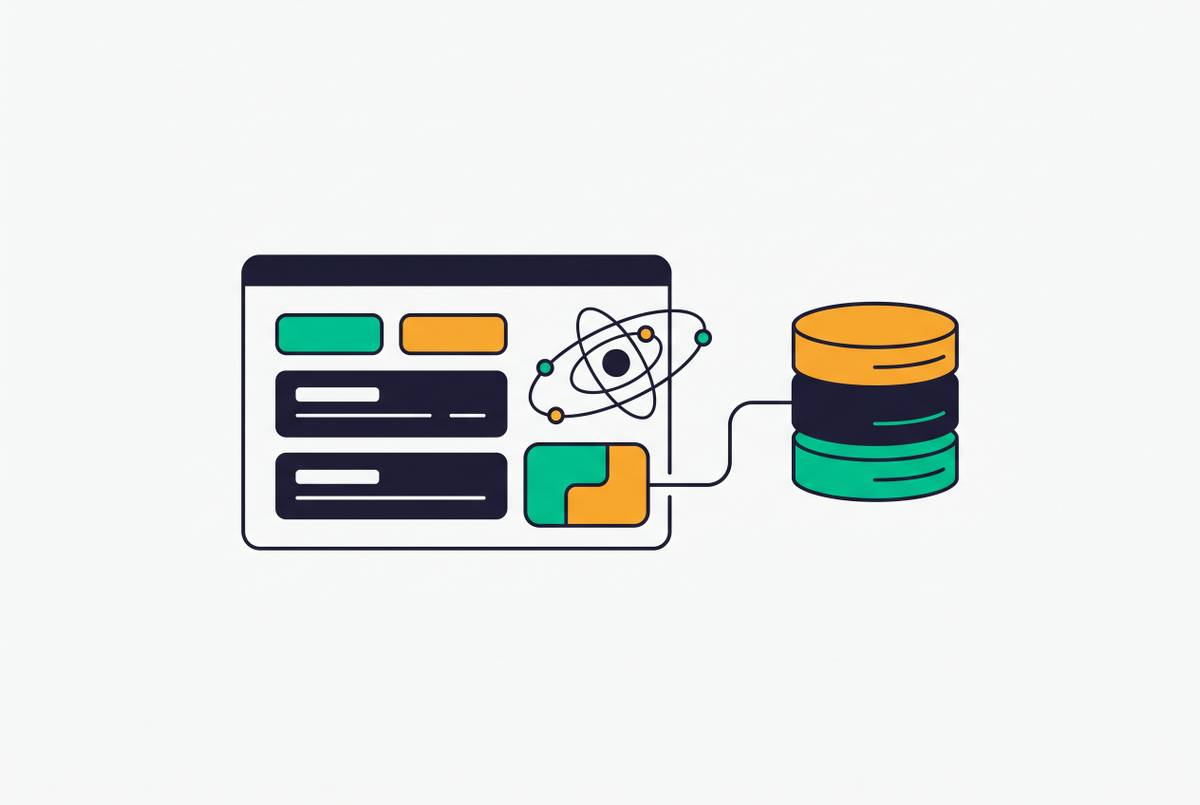
Backend control is equally important for a data export feature. A REST or GraphQL API with predictable JWT or token-based authentication allows the host application to manage integrations without customer-facing UI interaction. Teams need programmatic access to destination configuration, sync triggering, and sync status rather than an API that depends on sessions or manual steps. For example, the React SDK and API available from Prequel let teams embed the interface while automating destination management and sync triggering from their backend.
Documentation, sandboxes, and support responsiveness determine how quickly those capabilities become usable. It is hard to judge how useful they are in an environment the vendor has set up. A timed proof-of-concept in the team’s actual stack exposes the work between receiving credentials and shipping a working feature, testing whether deployment takes days or quarters.
AI agent data access and what MCP changes for data integration architecture
The Model Context Protocol, or MCP, shifts integration work toward exposing structured, scoped data to AI agents. Originally from Anthropic and now governed by the Linux Foundation’s Agentic AI Foundation, it is an open standard for AI assistants to call tools and access data sources. Its hub-and-spoke architecture reduces the need for separate integrations between every model and platform. An MCP server can provide a common interface for Claude, ChatGPT, Cursor, and custom agents. Teams should plan for that interface while checking whether their integration platform already supports it.
A SaaS product exposing customer data through MCP must scope access so that each customer’s agent can query only that customer’s data. This creates a governance boundary because agents expand the places where sensitive information can be requested, combined, and transmitted. Enforcement must happen at runtime as well as through settings reviewed by SaaS posture tools.
The sync layer matters because agents need structured data in a tenant-scoped location they can reach. Support for AI agent access to synced data makes Prequel one option for that underlying layer. The planning requirement is to establish isolation before adding an AI access path.
How to run a structured evaluation — the questions that separate demo performance from production readiness
A structured evaluation starts by matching the platform category to the feature the customer needs. For white-label embedded data export, the target is delivery to customer-controlled storage. From there, evaluate white-label depth, multi-tenant isolation, security, pricing under growth, and developer experience in that order. Each stage should give the team evidence it can check on its own, away from the demo.
Begin with a self-serve proof-of-concept that applies the required branding in the actual product. Then request documentation showing where tenant context is enforced and how routing or row-level security protects it. Carry the same boundary into security review by examining storage locations, retry handling, and deployment options against procurement requirements. Next, use the proposed contract to work out what growth will cost. Finally, embed the UI, trigger a sync through the API, and handle an authentication failure while measuring time from zero to working.
If AI features are on the roadmap, extend the isolation test to agent access rather than treating MCP support as a separate checkbox. As a final check, ask which customers the vendor has lost and why, and assess whether the answer addresses production limitations directly.