The Warehouse-Native Architecture for Shipping Customer-Facing Self-Serve Data Export
Export straight from your warehouse, with isolation and permissions enforced.
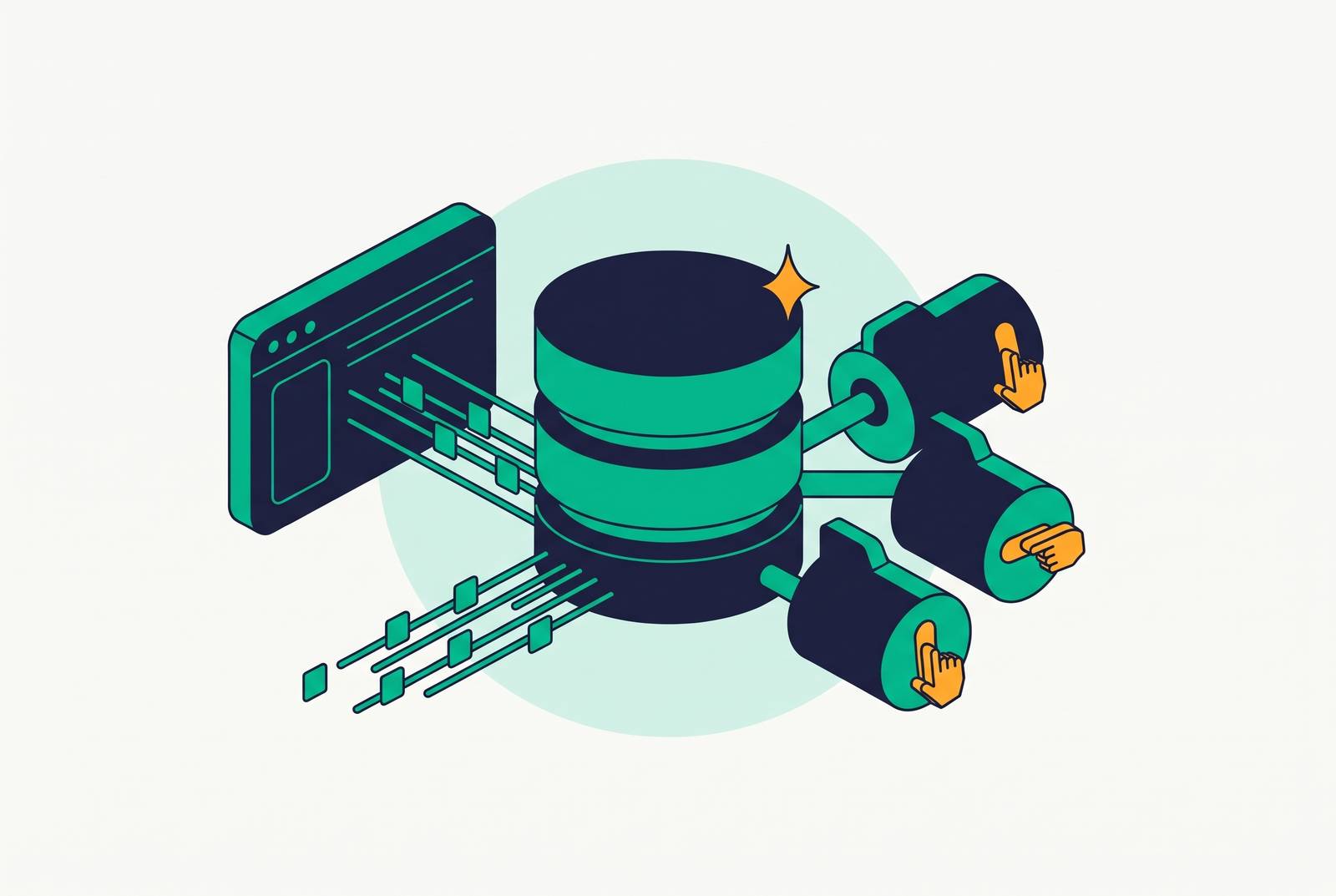
For B2B SaaS teams that want to replace an internal ETL vendor for customer-facing self-serve data export, warehouse-native delivery is a better foundation than another internal ETL workflow. The warehouse remains the governed source of truth, while an embedded delivery layer lets customers configure exports to their own destinations. The build-or-embed decision turns on tenant isolation, permission enforcement, incremental delivery, and product integration.
Why B2B SaaS teams are treating data export as a product feature, not an afterthought
A customer asks to sync their data to their warehouse, and the request becomes a support ticket, a manually prepared CSV, or another one-off API endpoint. Engineering can fulfill the request, but the customer still cannot control when their own data becomes available. That friction erodes trust in the product. During enterprise procurement, customers ask whether they can access, govern, and export their data on their own schedule.
Instead of maintaining exceptions for individual accounts, the team ships a repeatable path that customers can use themselves. Warehouse-native export lets that path use the governed data without the need for separate data infrastructure. The investment is therefore not simply a way to reduce support work. It makes access to customer data part of the product’s retention strategy.
What warehouse-native architecture actually means for a SaaS product team
Warehouse-native architecture uses the warehouse both to govern data and to deliver it to customers. Export logic reads from that governed source rather than from a second copy held in a vendor’s proprietary store. This is not a warehouse construction project. For a SaaS team that already has a warehouse, it is a decision about where export logic runs and which system defines the records customers receive.
The distinction becomes clearer when a separate store sits between the warehouse and the customer. The same record then sits in more than one place, and engineers have to keep those copies in sync. Scheduled synchronization also creates lag between the authoritative record and the export layer. Every copy expands the governance burden. Each store is another place to secure and another system where data must be deleted when a privacy-related deletion request comes in.
In the warehouse-native pattern, identity resolution, segmentation, and activation run in place, with the delivery layer reading the resulting governed data. The data team’s models and transformations therefore shape what customers receive without a second transformation layer to maintain. Cloud-native warehouses separate compute from storage, making in-warehouse analytical work practical at SaaS scale.
Tenant isolation: how to scope each customer's data without duplicating infrastructure
Tenant isolation must be settled before export logic. Consider a shared table that holds Customer A’s and Customer B’s records, where each export query is expected to apply a tenant filter. If Customer B’s export omits or misconfigures that filter, the job can include Customer A’s records. The file-delivery system cannot fix a boundary that the query failed to enforce. Choosing this model means every export job has to enforce the tenant filter.
A shared schema with row-level security has the lowest infrastructure cost, but depends most heavily on correct predicates and is hardest to audit. Schema-per-tenant provides a stronger boundary and can scale to hundreds of tenants before its overhead becomes significant. Database-per-tenant, or a warehouse account per tenant, provides the strongest separation at the highest operational cost. It fits contracts or residency requirements that call for separate environments.
Teams selling into regulated industries such as finance or healthcare need schema-per-tenant at minimum from day one, while other products may accept the trade-offs of shared schemas. No model is universally correct. A clean warehouse boundary passes into the export layer, whereas predicate-based separation requires every export job to reapply and re-audit the filter.
Permission boundaries: what customers can see, query, and export from their own slice
Tenant isolation keeps organizations apart, while permission boundaries control what people within each organization can access. One does not substitute for the other. If permissions exist only in the application UI, a user who finds or guesses a direct API endpoint can read whatever the warehouse query permits. The correct design runs every export query under a warehouse role or service account restricted to the tables and columns that user is allowed to access.
Column-level controls are especially important for export because belonging to a tenant does not grant access to every field associated with it. An export must exclude vendor-internal fields, other tenants’ data, and regulated attributes the recipient has not been permitted to receive. Application roles must map to warehouse permissions. An analyst, for example, may be allowed to query data without being allowed to export raw PII.
Those permissions also need to change with the user’s status. Offboarding should remove warehouse access in the same transaction. Otherwise, application access and data access diverge precisely when revocation is required. The UI can reflect the permission boundary, but the warehouse must enforce it regardless of how a request arrives.
Export mechanics: incremental delivery, file formats, and destination targets
During enterprise procurement, teams must commit to how the product will deliver data. If the customer wants a drop zone for its own pipeline, cloud object storage such as S3, GCS, or Azure Blob fits that requirement. If the customer wants managed, queryable tables without a separate ETL step, direct delivery to Snowflake, BigQuery, or Redshift fits better. The choice also assigns responsibility for loading. With object storage, the customer handles downstream ETL, while with direct warehouse delivery, the SaaS product has to handle the write.
Once the destination is clear, cadence and change tracking determine the delivery workload. Full-table exports work for small tenants, but reading old records that have not changed over and over wastes compute as tenants grow. Incremental delivery reads only rows changed since the last successful export, using a reliable watermark column, change-data-capture log, or dbt snapshot. The resulting files are smaller and faster to load. Running batch-incremental exports often meets enterprise needs without the need for a streaming architecture.
Format follows the receiving system’s requirements. If a streaming pipeline needs schema information or schema evolution must be tracked, a file format that includes the schema within each file is preferred. If the customer’s tools cannot support Parquet, CSV remains the lowest common denominator and belongs as a secondary option.
How the warehouse handles cross-destination queries without moving data
Federated queries create an alternative to scheduled delivery for some enterprise accounts. Instead of pushing files to a destination, the architecture can allow a customer’s warehouse or BI tool to query the governed data layer directly. Access remains subject to the permission boundary. This changes the product’s responsibility from repeatedly delivering a dataset to providing governed access where the warehouse capabilities support it.
Google Cloud has outlined how BigQuery can query data across Databricks, Snowflake, and AWS Glue through federated Apache Iceberg REST catalog connections without moving the underlying datasets. A single SQL query can join data held across those systems. Whether it helps depends on the customer’s data environment and whether the sources they need support that connection pattern.
Data-team-heavy enterprise accounts are the strongest fit because their existing analytical tools can become the access surface. Avoiding a scheduled copy changes the latency and cost trade-offs while keeping governance at the source. Query results still cross the boundary. Customers needing portability, archives, or loading into tools that cannot issue federated queries still need file delivery, so federation supplements export.
How do customers export their own data without a separate data portal?
A customer logs into the SaaS product, opens its export section, configures a Snowflake destination, and sets a cadence. An email arrives when the first export completes. The warehouse architecture is invisible during that journey. Its value reaches the customer through a configuration surface that makes destination selection, scheduling, and status understandable without an engineering request.
An embedded React SDK or web component can place that surface inside the product’s existing design system without an iframe seam. White-label presentation keeps the SaaS product’s branding consistent rather than introducing an integration vendor’s logo at the point where customers authorize data movement. Permissions must be consistent too. A column unavailable to the user in the warehouse should not appear as an option in the export interface.
Technical customers also need an API-first route through which they authenticate, submit a configuration, and poll for completion. That complements the embedded UI rather than forcing every account into the same interaction. A separate portal is easier to ship, but breaks the promise of self-service within the product. Pricing can create a similar disconnect if it discourages movement. Destination-based pricing aligns charges with configured destinations rather than penalizing customers for exporting more of their data.
Security and compliance as structural properties of the architecture, not add-ons
Warehouse-native architecture earns its compliance story through enforceable boundaries. Keeping the governed source in one place avoids a persistent intermediary copy, although delivered files still exist at customer destinations. Source-level permissions make access restrictions independent of the application interface. These properties help with enterprise review, but they do not automatically lead to certification. SOC 2 Type 2 remains a baseline procurement requirement.
The evidence must demonstrate operation over time. Auditors examine multi-tenant isolation, the cloud shared-responsibility model, CI/CD change management, API security, and availability. Continuous-monitoring exports, cloud configuration snapshots, and SIEM log exports with timestamps show whether controls operated throughout the audit window.
End-to-end encryption in transit between the warehouse and customer destination must be on by default, while private-cloud deployment meets contracts that limit where data can be or which cloud accounts can hold it. AI agents processing exported customer data need the same contractual protections, including DPAs and subprocessor disclosure, as the export pipeline. Zero Trust adds ongoing operational obligations. Continuous identity verification, least-privilege roles, segmented network zones, real-time access tracking, and regular permission reviews must accompany the architecture.
What to build in-house and what to embed, given the engineering cost of each layer
Building every layer in-house is a multi-quarter infrastructure commitment. Tenant isolation and permission enforcement are only the beginning, followed by incremental delivery, destination management, the customer interface, and compliance evidence. That work displaces core product development. The decision is therefore whether ownership makes the product meaningfully better and whether that difference justifies ongoing maintenance.
An in-house build can be justified by unusual data models, proprietary warehouse setups, or export requirements that differ substantially from standard patterns. Embedded components can impose constraints in those circumstances, and working around them may cost more than building directly. Destination connectors, incremental sync logic, interface components, and platform security certifications are common across many B2B SaaS products.
An embedded solution must still meet the architecture’s standard. Its tenant isolation must withstand compliance review, its white-label interface must fit the product, and customers must be able to configure exports without engineering support. Destination coverage needs to include the targets enterprise customers use, including Snowflake, BigQuery, Redshift, S3, and GCS. Platform-level SOC 2 Type 2 certification and pricing that does not penalize data movement are also selection criteria.
For teams with standard export requirements, embedding delivery is the pragmatic choice. It preserves engineering capacity for warehouse models, data quality, and product logic specific to the business. The architecture is well-understood, and its standard components are available. The remaining decision is whether to rebuild that commodity layer or ship the differentiating one.