How Enterprise Data Teams Evaluate Warehouse Export Tools Before Engineering Ever Gets Involved
Data teams eliminate unsuitable export tools before engineering evaluates them.

To export enterprise customer data to Snowflake and Redshift without custom pipelines, an organization needs a warehouse export tool that fits its governance rules, security architecture, and customer-facing product. Connector support alone is not enough. Before engineering reviews implementation, data, security, and product stakeholders determine which tools qualify, making their filters the starting point for evaluation.
Why non-engineering stakeholders now control the first cut of warehouse export tool evaluations
A vendor can pass a technical proof of concept and still lose the deal because an upstream requirement already disqualified it. A transfer that works proves that data can move. It does not prove that the transfer respects data ownership, stays within an acceptable compliance boundary, or belongs in the customer experience the product team intends to ship. Those decisions have owners outside engineering, and their approval cannot be inferred from a working integration.
This division of responsibility reflects the reach of warehouse export tools. Along with moving data between systems, they affect governance policies, compliance posture, the experiences in customer-facing products, and AI agent access. Each area introduces a separate acceptance test. The data team may approve destination coverage while security rejects the way customer data is cached. Product stakeholders may then reject a tool that passes both tests because customers must leave the application to configure it.
The evaluation therefore works as sequential elimination. A broad connector library does not compensate for an unacceptable data flow, and strong security controls do not make an unsuitable embedding model native to the product. Treating these requirements as interchangeable obscures why technically capable tools disappear from a shortlist.
For buyers and vendors, the practical distinction is between technical feasibility and organizational eligibility. Engineering can establish whether an integration works within the existing stack, but the earlier stakeholders establish whether it is an integration the organization can adopt. That makes the sequence consequential even when discussions overlap. A demonstration that answers only engineering questions may leave the actual grounds for rejection untouched.
How the data governance layer sets the first hard boundary
The data team’s first question is whether the proposed tool belongs to the category that solves the organization’s problem. Feature comparison comes after that decision. Enterprise data management spans catalogs, master data management platforms, ETL and integration tools, data lakes and warehouses, and unified platforms. These categories meet different needs, even when they describe their features in similar ways.
The distinction becomes concrete when a governance platform is purchased to solve a problem that requires real-time data flows. If the platform cannot support those flows, the failure is categorical. The governance team that approved the purchase must then account for a tool selected against the wrong definition of the problem.
A formal data quality assessment helps establish that definition before procurement. Completeness, accuracy, and consistency requirements give evaluators a basis for judging what the tool must support. Without that baseline, even well-resourced teams can end up retrofitting tools to needs they were not designed to meet.
When analysts cannot find data, the need is a catalog. When records conflict across systems, the need is master data management, while data trapped in siloed pipelines points toward integration. A warehouse export tool reaches meaningful evaluation only after the team has established that moving data to a destination addresses the underlying need.
AI workloads make this boundary more demanding because generative models, agentic workflows, and machine learning systems need data that remains fit for use. Periodic profiling and hand-authored governance rules cannot meet that expectation at scale on their own. Export cannot be evaluated separately from stewardship. A tool without clear data ownership signals, lineage metadata, or defined access policies can therefore fail the governance filter before its connector count or throughput claims become relevant.
How can customer data reach Snowflake and Redshift without custom pipelines?
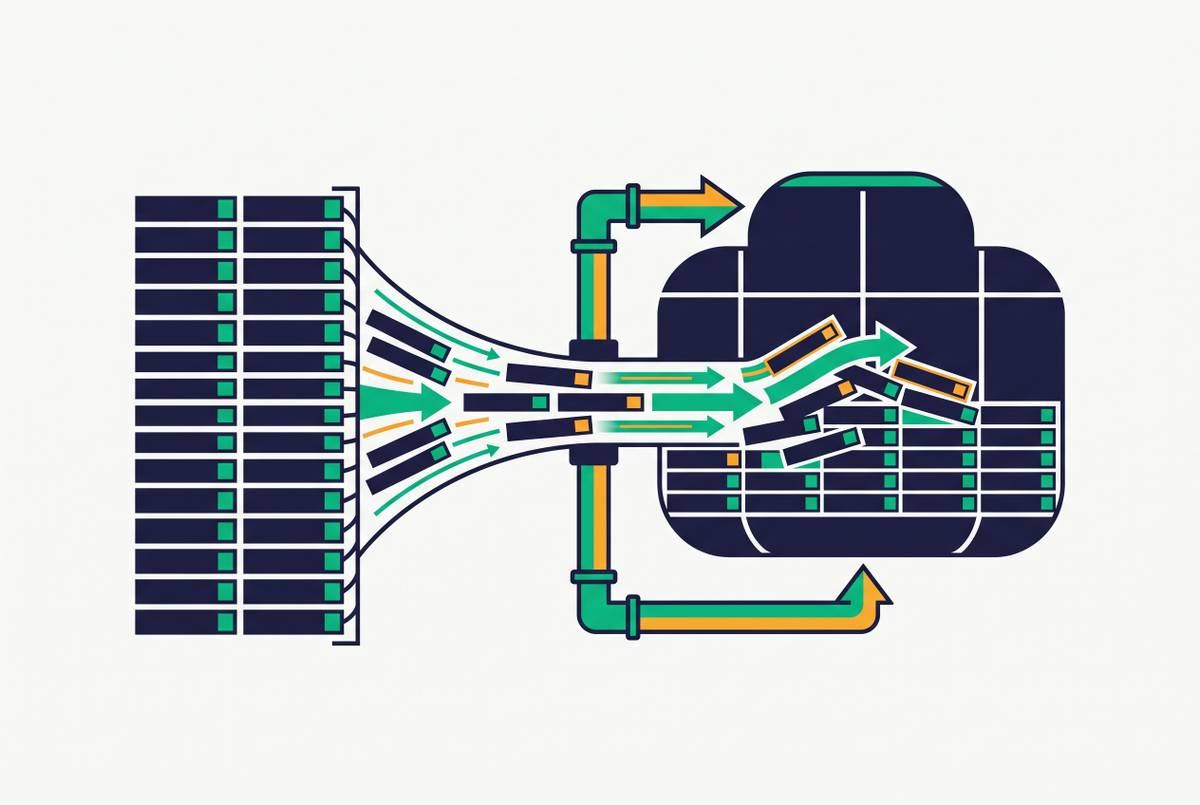
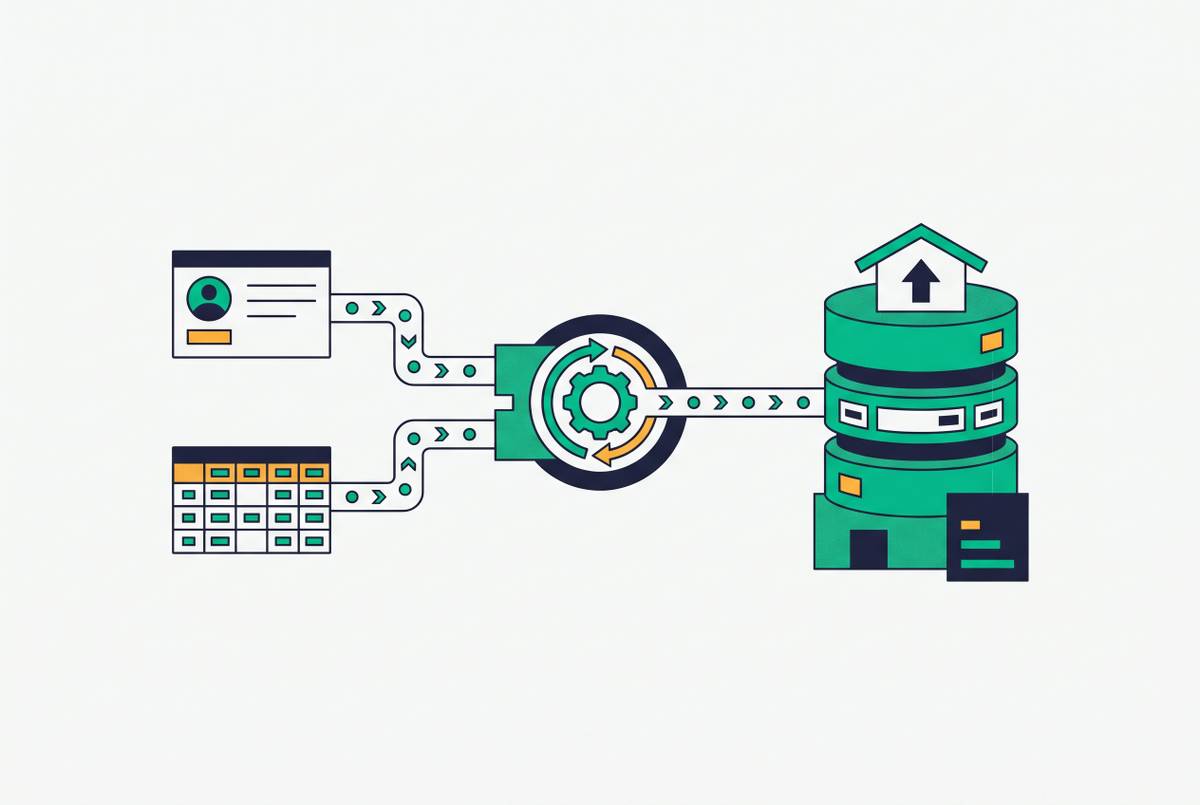
Once data teams know the category fits, they check whether the export tool supports the sources, destinations, and delivery patterns they use. For customer data headed to Snowflake or Redshift, the warehouse name is only the beginning. Automatic synchronization of CRM and product data also depends on the relevant connector coverage and how those connectors are maintained.
Teams work across Snowflake, BigQuery, Redshift, and Databricks, as well as relational databases and object storage. Thin coverage can indicate a narrow target market or a future maintenance burden for the buyer. Breadth is useful when it reflects the destination landscape customers operate in.
Maintenance is the more revealing test of reliability. Evaluators ask how connectors are maintained when schemas change or APIs are versioned, because initial connectivity says little about long-term operation. A vendor unable to explain that process leaves a central risk unresolved. For teams trying to avoid custom pipelines, uncertainty about connector maintenance weakens the reason to buy the tool in the first place.
Delivery patterns narrow the field further. Domo’s 2026 guide distinguishes batch, real-time, CDC, and API-connector patterns, giving evaluators more precise terms than a general promise of synchronization. Scheduled batch loads cannot meet the same needs as live dashboards or AI agent access to synced data. Evaluators test whether the supported pattern matches the use case.
Object storage also belongs in this coverage review. S3, GCS, and Azure Blob can be required destinations for AI pipelines and lakehouse architectures alongside warehouse support. Evaluators then test the reverse path by asking how they can export their data if they stop paying. An answer built around vague timelines or professional services engagements signals lock-in risk.
How security and compliance teams apply an architecture-level filter, not just a certification checklist
Security teams can reject a tool that satisfies every governance and connector requirement because they evaluate a different boundary. They first examine the data flow and whether it introduces a sub-processor that expands audit scope. Certifications follow that architectural review. Security teams focus on where customer data goes and what obligations follow from its presence there.
A sync-and-cache architecture stores customer data outside the customer’s own VPC for a short time. That cache is another node that teams must add to their inventory, encrypt with managed keys, and cover in their breach notification plans. It also introduces requirements for encryption key rotation, data residency verification, and inclusion in SOC 2 audit scope. Temporary storage still creates a security responsibility. Calling it an intermediate step does not remove the obligations attached to it.
A zero-storage or direct-sync architecture removes that external data-at-rest node and the retention policy attached to it. This can narrow the audit scope and avoid the breach notification cascade associated with a compromised vendor-held cache. The trade-off remains operationally significant, however. In a zero-storage pattern, every read is a live call subject to upstream availability, which may not suit bulk export or offline reporting. Security evaluators therefore ask which architectural pattern applies to each operation rather than accepting one label for the entire platform.
SOC 2 Type 2 certification is a procurement baseline. Control expectations in 2026 audits extend to zero-trust access, network segmentation, multi-factor authentication, least-privilege policies, API security, and microsegmentation. Deployment options face a separate test. A tool that runs only in a shared cloud cannot meet buyers’ needs when their rules for residency or cross-border transfer call for private-cloud or VPC deployment.
Healthcare also requires a check for Business Associate Agreement coverage. Some platforms hold SOC 2 Type 2 certification but cannot sign BAAs, leaving them unsuitable for those requirements despite their certification. An acceptable architecture, end-to-end encryption, SOC 2 Type 2 certification, and appropriate private-cloud options address different parts of the review. Teams still need to check each one, along with BAA eligibility where it applies.
Where product and strategic stakeholders apply the fit filter that security and data teams cannot
Product stakeholders evaluate whether connectivity can become part of the product they intend to ship. Their criteria include the embedding model, pricing structure, and customer-facing experience. These are not secondary preferences after security approval. A compliant tool can still be wrong for a product team if its operating model prevents that team from owning the experience.
The central distinction is between integrating a service and embedding a feature. A tool may be technically straightforward to integrate while requiring customers to leave the host application to configure their warehouse connection. That handoff creates a visible seam. For a product whose requirement is native warehouse export, a hosted configuration portal fails the fit test even if the underlying transfer works well.
Embeddable React SDKs and clean APIs give product teams a way to build connectivity into their own interface under their own brand. Hosted-only portals do not offer the same depth of control. Product stakeholders therefore judge embedding by the experience it permits, rather than by whether an integration endpoint exists.
Self-service access is part of that judgment. Domo’s guide distinguishes access that reduces demand on IT from processes that route requests through a technical team. Product stakeholders read this as a customer experience distinction because a feature that depends on technical intervention offers a different experience from one customers can configure themselves. Pricing must fit that experience as more customers use it. A model that punishes scale can undermine the product strategy even when the interface and security posture are suitable.
Exported data may need to remain queryable by agents with role-based access, row-level security, and lineage intact. Availability alone is not governed access. If the tool cannot support those conditions, it may serve the immediate export requirement while falling short of the next phase of a data-driven or AI-powered product roadmap. Neither connector breadth nor certification resolves that strategic gap.
What survives all three filters and why that set is smaller than vendors expect
The surviving shortlist is the intersection of governance, security, and product fit. It is smaller than the set produced by any single review because each layer removes tools for independent reasons. Strong connector coverage can coexist with an unacceptable caching architecture. A certified platform can have unsuitable pricing, while a well-priced and secure tool can still require a customer handoff that the product team will not accept.
Engineering enters a decision already constrained by those exclusions. Its review validates integration with the existing stack, the suitability of the SDK and API surface, and achievable throughput at scale. That work remains substantive. It does not, however, reopen settled questions about data ownership, compliance obligations, or the intended customer experience simply because another tool performs well in a technical demonstration.
Evaluators test whether a working API call is achievable within minutes of reading the documentation. That test links the work needed to get the tool running to time-to-value and long-term maintenance cost.
Teams need to test scale just as closely because today’s usage can hide both cost and performance problems. The trap is to model today’s volumes and stop. Behavior at multiples of that volume may remain invisible until production exposes it during a high-stakes operation, when little budget remains to change vendors. A tool’s fit therefore depends on more than the economics and throughput of the initial deployment.
The practical lesson for vendors is to map their posture to each filter before the first meeting. Category fit, connector maintenance, architecture, certification, deployment, embedding, pricing, and AI readiness can turn a months-long elimination process into a focused first-call discussion. For buyers, those answers distinguish tools built for internal data teams from tools built to make connectivity an enterprise product feature. The evaluation gauntlet is not an obstacle placed in front of a suitable tool. A tool designed around all three layers was built to clear it.