Snowflake-Ready Customer Data Without Engineering Tickets
A reusable connectivity layer replaces per-customer ETL work.

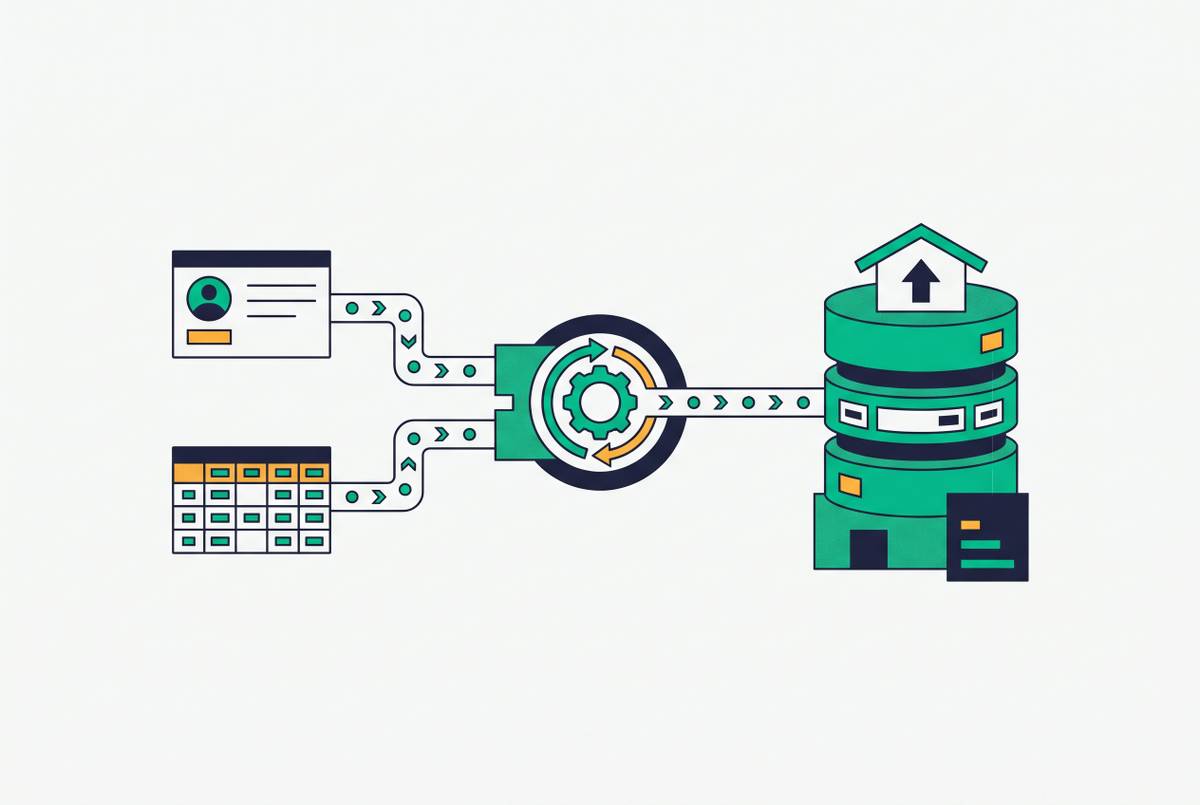
Getting customer data into Snowflake or Redshift without custom ETL pipelines is achievable when data connectivity is an embedded product feature. The bottleneck is the assumption that every new export must reopen data access, permissions, and tenant-isolation work. A reusable connectivity layer removes that work from each customer request, replacing bespoke infrastructure projects with self-serve delivery.
What "Snowflake-ready" actually requires before any embed is possible
Each customer’s rows must be scoped to their organization, usually through dynamic filters applied at query time. That scope must hold across dashboards, exports, and AI interfaces. Otherwise, each new surface becomes another security implementation. Authentication must also carry the requesting user’s identity through to Snowflake instead of using a shared service account for every user. OAuth identity threading preserves the attribution that a shared account loses.
ELT suits SaaS stacks because warehouse compute makes it practical to land raw data and model it inside the warehouse. Once the data is there, embedded analytics can issue live SQL so that Snowflake row access policies fire at query time. An extract or import creates another copy outside that enforcement point. An iframe changes presentation while leaving this underlying security boundary unchanged.
A governed semantic layer uses the same metric definitions at query time across dashboards, exports, and AI surfaces. Deployment requirements introduce a further boundary. Snowflake is strictly cloud-based on AWS, Azure, and GCP, with no on-premises or private-cloud deployment option. Any private-cloud requirement therefore falls to the embedding and connectivity layers above it.
Why white-label is now the baseline, not a premium tier
Enterprise buyers expect embedded analytics to behave like part of the SaaS product. Removing a logo is only the beginning. Dashboard themes must match the host product, while reseller and OEM deployments require different themes for different tenants.
White-label depth progresses from hiding the vendor logo to dashboard theming, per-tenant theming, and finally removing vendor branding from every surface. Most platforms reach the third level. The fourth remains rare because it includes custom domains, email notifications, PDF exports, AI responses, and error messages. A branded dashboard alone cannot establish that the whole experience belongs to the host product.
AI extends this requirement beyond visual design. A chat response that names the analytics vendor can undermine the host brand and confuse support workflows, even when the surrounding interface looks native. AI grounding, chat surfaces, and response tone therefore need to be configurable by the host product. The practical test of production independence is whether a SaaS team can ship a per-tenant theme, custom domain, and branded AI chat without filing a ticket with the analytics vendor.
The multi-tenant test: five questions that decide whether an embedded platform survives production
A platform can satisfy every branding requirement while leaving tenant isolation unresolved. The reader’s evaluation should therefore begin with five questions about construction, governance, control, AI, and load. These questions distinguish a reusable product capability from an integration that will require repeated engineering intervention.
First, is the platform multi-tenant by construction, or was embedding added to a single-tenant design? Second, does one governed semantic layer serve every tenant and apply metric definitions and access rules at query time? Third, can the host team control the entire interface, or only recolor a vendor widget? That distinction ranges from theming an iframe to building an interface on an API. Each answer establishes how much of the product the SaaS team actually controls.
Fourth, is AI grounded in the governed semantic layer and restricted to each tenant’s permissions, or does it generate SQL against raw tables? Fifth, does the platform query the host team’s warehouse and stay fast under load, with caching that keeps one heavy tenant from slowing the others down? The load test makes this concrete. Triple the largest tenant’s usage and see whether other tenants slow down. Buying on a demonstration can leave these questions unanswered until customers are already using the product, when branding work cannot repair the missing architecture.
How the leading embedded analytics platforms for Snowflake actually compare
The named platforms differ in tenant enforcement, interface control, semantic governance, AI access, and deployment. These criteria identify which parts of the architecture each option addresses. The details supplied also leave too much unknown for a like-for-like comparison of cross-source joins, so teams must assess that requirement separately.
Cube has a semantic layer, a multi-tenant design, per-tenant row-level security, and caching above the warehouse. Its four embedded surfaces range from a drop-in iframe to a fully custom AI analyst. The Analytics Chat API and Core Data APIs let the host team build an experience without vendor chrome.
Knowi offers three embedding methods with different control boundaries. Simple URL Embed supplies a no-code shareable link, while Secure Encrypted URL adds AES encryption, time-to-live expiration, and tamper-proof tenant filtering. The JavaScript API provides custom CSS, granular menu controls, and full white-label control. SAML SSO or an API-driven token maps users to their existing permissions, and the platform inherits the session to enforce row-level security. Its managed service also covers Snowflake connections, dashboards, integrations, and ongoing requests.
Luzmo emphasizes native interface composition through its SDK and web components, with iframe embedding available as a fallback. View-mode charts render in the host DOM and inherit the application’s fonts, colors, and components. Luzmo Flex supports composition from individual building blocks. This fits teams prioritizing fast, native-feeling dashboard embeds. Sisense suits mature applications seeking deeply infused embedded dashboards, although the supplied details do not establish its behavior on the other evaluation criteria.
Querio stores semantic context as plain SQL, Markdown, and Python files synced to GitHub in the same repository as a dbt project. It combines embedded dashboards, a branded natural-language analytics assistant, and reactive notebooks. Governance extends to its agent access path. Its MCP implementation uses OAuth so that each agent query inherits the requesting user’s data permissions without a shared service account. This gives teams a concrete identity model to evaluate, rather than an AI interface alone.
Where data connectivity as an embeddable feature fits alongside these platforms
Embedded analytics controls how customers explore data already available for querying. Connectivity, which Prequel, a white-label data integration platform for product teams that charges per destination rather than by rows or data transferred, handles for SaaS vendors, solves the preceding problem of delivering that data to the destination. These layers complement each other. A dashboard embed does not by itself give customers a self-serve way to receive SaaS product data in their own warehouse.
Stripe Data Pipeline demonstrates source-owned delivery into Snowflake, Redshift, Databricks, or BigQuery, with a full load every three hours. HubSpot offers a Snowflake share on Data Hub Enterprise, updated up to every 15 minutes. The source vendor owns the delivery path. These examples show how customer access can become a supported product feature. They also distinguish destination support and delivery frequency, which buyers must evaluate separately.
A SaaS vendor offering that experience across Snowflake, Redshift, BigQuery, or a private database needs an embeddable integration layer. Its requirements include multi-tenant isolation, end-to-end encryption, SOC 2 Type II certification, and destination-based delivery that does not penalize greater data movement. An embeddable React SDK and clean API provide the product integration mechanism. That approach supports delivery in days rather than quarters without requiring the SaaS team to maintain custom pipeline code. The analytics layer can then serve governed customer experiences over the delivered data.
How AI agents change what "Snowflake-ready" means for customer-facing products
The Model Context Protocol is an open standard that connects AI assistants to external data sources without the need to build a custom API for each connection. In a customer-facing SaaS product, an MCP server exposes the data collected about each customer’s business within that customer’s tenant scope. This extends access beyond dashboards and exports. A customer’s agent can query its business data through the product, but the interface alone does not establish permission to see it.
The agent must inherit the user’s actual permissions. It should not receive the combined access of everyone in the account. Passing a per-user JWT or API token to the MCP server supplies the identity needed to scope queries, while OAuth-based access provides the concrete model described for Querio. The distinction is architectural. An agent connected through an elevated shared account does not preserve the same user boundary.
Semantic governance makes that boundary reusable across query types. Row-, column-, and field-level security defined in the model can apply to AI-generated queries as well as conventional analytics. Application-only filtering is less durable because agents can construct queries middleware did not anticipate. Connectivity delivers the data, but identity and query-time controls determine which agent can use it.
Enterprise security and compliance requirements the embedding layer must satisfy
Self-serve delivery requires controls built into the delivery architecture. SOC 2 Type II is a baseline enterprise expectation for the layers above Snowflake, while end-to-end encryption protects data through the connectivity path. Neither replaces tenant isolation or identity threading. Certification and encryption address different requirements from deciding which rows a particular user may query.
Warehouse-native enforcement supplies the durable query boundary. Snowflake row access policies and masking policies operate where queries execute, regardless of which analytics interface initiated them. However, that boundary still depends on the identity and privileges used for the request. An AI agent querying through an elevated service account can bypass the restrictions intended for the end user.
Knowi illustrates how embedding-layer deployment can address additional enterprise requirements. Its managed cloud is SOC 2 Type II certified, while customers can also deploy the platform in their own environment. Its on-premises AI deployment supports Docker or Kubernetes and GPU acceleration, keeping AI processing within the host infrastructure. This on-premises service places the private deployment boundary under customer control, separating Snowflake warehouse hosting from the security requirements of the embedded application.
What shipping data connectivity as a product feature looks like in practice
The concrete deliverable is a customer-facing data delivery feature backed by an embeddable React SDK and clean API. The SaaS team configures destinations, delivery frequency, tenant isolation, and identity threading without writing and maintaining custom pipeline code.
The embedding mechanism determines how much interface ownership that feature provides. An iframe is the simplest option but offers limited control, while JavaScript SDK and API-based embedding support full customization. Web components provide a more native feel. The appropriate choice depends on how closely the data delivery and analytics surfaces must fit the host application. That choice changes how the feature looks and how much work it takes to integrate, but the tenant and identity requirements stay the same.
The commercial model also shapes the self-serve experience. With destination-based pricing and no data-transfer fees, customers can move more data without paying a penalty. Transfer-based penalties create an incentive to under-deliver, which works against the purpose of customer-controlled access. Delivery frequency and destination support are clear settings in the product, instead of promises buried in a request to engineers.
The resulting stack has distinct, connected responsibilities. An embedded connectivity layer delivers customer data to the chosen warehouse, and a governed semantic layer defines metrics and enforces tenant scope at query time. An embedding layer presents dashboards, AI chat, and notebooks under the SaaS product’s brand. End-user identity runs from the product’s authentication through to the warehouse, preserving audit attribution across those surfaces.